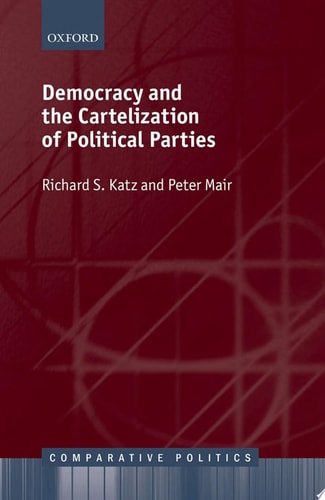
Democracy and the Cartelization of Political Parties
0
0
As an Amazon Associate and affiliate partner, Menrva Books earns from qualifying purchases. Learn more
Author Description
Political Parties Have Long Been Recognized As Essential Institutions Of Democratic Governance. Both The Organization Of Parties, And Their Relationships With Citizens, The State, And Each Other Have Evolved Since The Rise Of Liberal Democracy In The 19th And Early 20th Centuries. Going Into The 21st Century, It Appears That Parties Losing Popular Support, Putting Both Parties, And Potentially Democracy, In Peril. This Book Traces The Evolution Of Parties From The Model Of The Mass Party, Through The Catch-all Party Model, To Argue That By The Late 20th Century The Principal Governing Parties And (and Their Allied Smaller Parties - Collectively The Political 'mainstream') Were Effectively Forming A Cartel, In Which The Form Of Competition Might Remain, And Indeed Even Appear To Intensify, While Its Substance Was Increasingly Hollowed Out. The Spoils Of Office Were Increasingly Shared Rather Than Restricted To The Temporary Winners; Contentious Policy Questions Were Kept Off The Political Agenda, And Competition Shifted From Large Questions Of Policy To Minor Questions Of Managerial Competence. To Support This Cartel, The Internal Arrangements Of Parties Changed To Privilege The Party In Public Office Over The Party On The Ground. The Unintended Consequence Has Been To Stimulate The Rise Of Extra-cartel Challengers To These Cozy Arrangements In The Form Of Anti-party-system Parties And Populist Oppositions On The Left, But Especially On The Right. Comparative Politics Is A Series For Researchers, Teachers, And Students Of Political Science That Deals With Contemporary Government And Politics. Global In Scope, Books In The Series Are Characterised By A Stress On Comparative Analysis And Strong Methodological Rigour. The Series Is Published In Association With The European Consortium For Political Research. For More Information Visit: Www.ecprnet.eu. The Series Is Edited By Emilie Van Haute, Professor Of Political Science, Université Libre De Bruxelles; Ferdinand Mülle
Menrva's Summary
THE THESIS
This work investigates the transformation of modern political parties into a 'cartel' structure that prioritizes state resources and managerial stability over genuine ideological competition. Authors Peter Mair and Richard S. Katz utilize historical analysis to trace the evolution of political organizations from mass-based parties to catch-all models. They argue that contemporary mainstream parties have effectively colluded to protect their collective interests, thereby hollowing out democratic substance and fueling the rise of populist challengers.
THE SCOPE MAP
What You Will Find
- Historical evolution of party models from the 19th century to the 21st century.
- Theoretical framework of the 'cartel party' and its impact on democratic governance.
- Analysis of the shift from policy-based competition to managerial competence.
- Examination of the internal power dynamics favoring the party in public office over the party on the ground.
Scope Limits
- The analysis focuses primarily on Western liberal democracies and may not fully account for non-Western party systems.
- The text does not provide prescriptive solutions for reversing the cartelization process.
THE AUTHORITY PERSPECTIVE
Political scientists frequently cite this work as a foundational text for understanding the decline of traditional party systems and the rise of anti-establishment populism. Readers often note the high level of academic rigor and the dense, analytical nature of the prose which makes it a standard reference in comparative politics curricula.
Page Count:
264
Publication Date:
2018-01-01
Publisher:
Oxford University Press
ISBN-10:
0192562002
ISBN-13:
9780192562005
Democracy
Political Theory
Comparative Politics
Government
Community Tags
Other Editions(2)
Similar Books

Reader Comments
Share Your Thoughts
No comments yet. Be the first to share your thoughts!