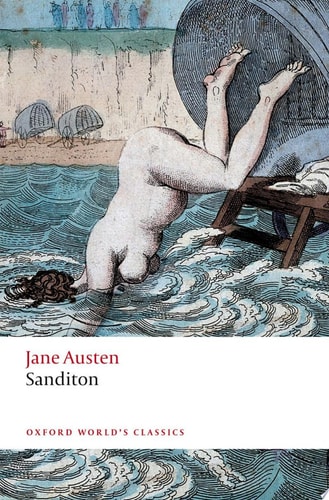
Sanditon
0
0
As an Amazon Associate and affiliate partner, Menrva Books earns from qualifying purchases. Learn more
Author Description
'No person could be really well... without spending at least six weeks by the sea every year' In Sanditon, Jane Austen writes what may well be the first seaside novel: a novel, that is, that explores the mysterious and startling transformations that a stay by the sea can work on individuals and relationships. Sanditon is a fictitious place on England's South Coast and the obsession of local landowner Mr Thomas Parker. He means to transform this humble fishing village into a fashionable health resort to rival its famous neighbours of Brighton and Eastbourne. In this, her final, unfinished work, the writer sets aside her familiar subject matter, the country village with its settled community, for the transient and eccentric assortment of people who drift to the new resort, the town built upon sand. If the ground beneath her characters' feet appears less secure, Austen's own vision is opening out. Light and funny, Sanditon is her most experimental and poignant work.
Menrva's Summary
THE PULSE
The arrival of Charlotte Heywood at the developing seaside resort of Sanditon exposes the social ambitions and eccentricities of the local inhabitants. Charlotte, a young woman of sensible character, observes the frantic efforts of Mr. Thomas Parker to elevate his humble fishing village into a fashionable destination. She navigates a landscape populated by hypochondriacs, opportunistic speculators, and social climbers who gather at the coast. The narrative, left incomplete at the author's death, utilizes a third-person perspective to examine the shifting dynamics of a transient community.
INSIDE THE PAGES
- Satirical portrayal of health-obsessed socialites
- Exploration of economic speculation and town development
- Contrast between traditional country life and modern seaside leisure
- Sharp character studies of the landed gentry
- Focus on the fluidity of social status in a new environment
- Irony regarding the medical trends of the early nineteenth century
- Examination of the transient nature of resort visitors
- Unfinished narrative structure providing insight into the author's late-career evolution
THE COLLECTIVE ECHO
Readers and critics frequently highlight this work as a departure from the author's established focus on settled country villages. Discussion often centers on the experimental tone and the shift toward a more cynical, observational style regarding social ambition. Many note that the unfinished nature of the manuscript leaves the reader with a sense of curiosity about the intended resolution of the various subplots. Scholars often point to the text as a significant example of the author's evolving vision during her final months. The balance of light humor and social critique remains a primary point of interest for those studying the development of the English novel.
Page Count:
126
Publication Date:
2019-01-01
Publisher:
Oxford University Press
ISBN-10:
0192577522
ISBN-13:
9780192577528
Satire
classic
English literature
Historical
Social Commentary
Community Tags
Other Editions(8)






Similar Books











Reader Comments
Share Your Thoughts
No comments yet. Be the first to share your thoughts!