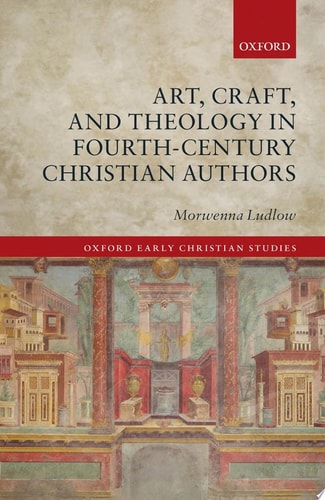
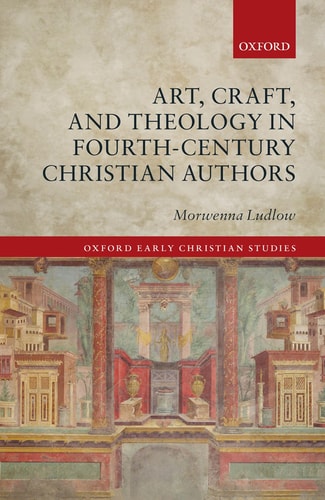
Art, Craft, and Theology in Fourth-Century Christian Authors
0
0
As an Amazon Associate and affiliate partner, Menrva Books earns from qualifying purchases. Learn more
Author Description
Ancient authors commonly compared writing with painting. The sculpting of the soul was also a common philosophical theme. Art, Craft, and Theology in Fourth-century Christian Authors takes its starting-point from such figures to recover a sense of ancient authorship as craft. The ancient concept of craft (ars, techne) spans 'high' or 'fine' art and practical or applied arts. It unites the beautiful and the useful. It includes both skills or practices (like medicine and music) and productive arts like painting, sculpting and the composition of texts. By using craft as a guiding concept for understanding fourth Christian authorship, this book recovers a sense of them engaged in a shared practice which is both beautiful and theologically useful, which shapes souls but which is also engaged in the production of texts. It focuses on Greek writers, especially the Cappadocians (Basil of Caesarea, Gregory of Nazianzus, and Gregory of Nysa) and John Chrysostom, all of whom were trained in rhetoric. Through a detailed examination of their use of two particular literary techniques—ekphrasis and prosōpopoeia—it shows how they adapt and experiment with them, in order to make theological arguments and in order to evoke a response from their readership.
Menrva's Summary
THE THESIS
This book investigates how fourth-century Christian authors utilized the ancient concept of craft (ars, techne) to bridge the gap between aesthetic composition and theological utility. Morwenna Ludlow, a scholar of patristics, examines how these writers viewed their literary output not merely as abstract discourse, but as a productive art form akin to painting or sculpting. By analyzing the rhetorical training of figures like the Cappadocians, the author argues that their texts were intentionally designed to shape the souls of their readers through specific, deliberate techniques.
THE SCOPE MAP
What You Will Find
- Analysis of the ancient concept of craft as a union of the beautiful and the useful.
- Examination of literary techniques including ekphrasis and prosōpopoeia.
- Focus on Greek writers, specifically Basil of Caesarea, Gregory of Nazianzus, Gregory of Nyssa, and John Chrysostom.
Scope Limits
- The study is primarily restricted to fourth-century Greek Christian writers and does not provide an exhaustive survey of Latin patristic literature.
THE AUTHORITY PERSPECTIVE
Scholars in the field of patristics and classical rhetoric recognize this work as a significant contribution to understanding the intersection of ancient literary theory and Christian theology. Readers frequently note the academic density of the prose, which provides a rigorous framework for analyzing how early Christian authors adapted classical rhetorical tools for theological ends.
Page Count:
288
Publication Date:
2020-01-01
Publisher:
Oxford University Press
ISBN-10:
0192588648
ISBN-13:
9780192588647
History
Christianity
Literary Criticism
Patristics
Theology
Community Tags
Other Editions(4)
Similar Books