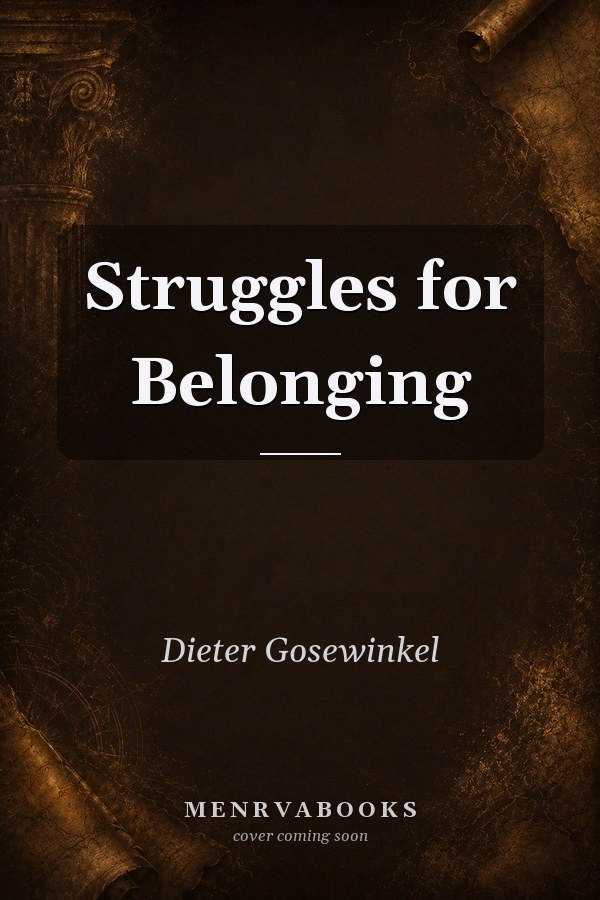
Struggles for Belonging
0
0
As an Amazon Associate and affiliate partner, Menrva Books earns from qualifying purchases. Learn more
Author Description
Recounts The History Of Citizenship In 20th Century Europe, Focusing On Six Countries: Great Britain, France, Germany, Czechoslovakia, Poland, And Russia. It Is The History Of A Central Legal Institution That Significantly Represents And At The Same Time Determines Struggles Over Migration, Integration, And Belonging.
Menrva's Summary
THE THESIS
This work investigates how the legal institution of citizenship functioned as a primary mechanism for defining inclusion and exclusion within European nation-states throughout the twentieth century. Dieter Gosewinkel, a scholar of legal and political history, utilizes a comparative framework to analyze the evolution of citizenship laws. He argues that these legal structures were not merely administrative tools but were central to the political struggles over national identity, migration, and the integration of diverse populations across shifting borders.
THE SCOPE MAP
What You Will Find
- Comparative analysis of citizenship laws in Great Britain, France, Germany, Czechoslovakia, Poland, and Russia.
- Examination of the legal evolution of national belonging from the early 1900s through the post-war era.
- Analysis of how citizenship status influenced state responses to migration and minority integration.
Scope Limits
- The study does not provide an exhaustive legal history of every European nation, focusing instead on the six selected case studies.
- The text does not focus on contemporary 21st-century citizenship policies or current migration crises.
THE AUTHORITY PERSPECTIVE
Scholars frequently cite this text as a foundational comparative study for understanding the legal architecture of European nationhood. Readers often note the academic density of the prose, which provides a rigorous examination of institutional history for students and researchers in the field.
Page Count:
544
Publication Date:
2021-01-01
ISBN-10:
0192585053
ISBN-13:
9780192585059
History
European History
Sociology
Citizenship
Migration Studies
Community Tags
Similar Books