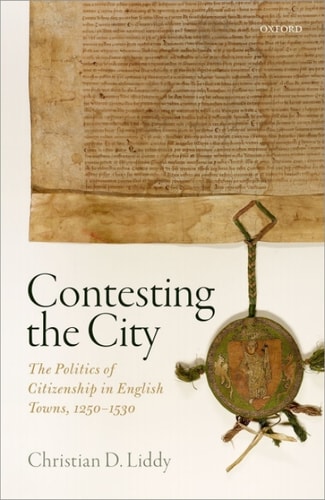
Contesting the City: The Politics of Citizenship in English Towns, 1250-1530
0
0
As an Amazon Associate and affiliate partner, Menrva Books earns from qualifying purchases. Learn more
Author Description
The political narrative of late medieval English towns is often reduced to the story of the gradual intensification of oligarchy, in which power was exercised and projected by an ever smaller ruling group over an increasingly subservient urban population. Contesting the City takes its inspiration not from English historiography, but from a more dynamic continental scholarship on towns in the southern Low Countries, Germany, and France. Its premise is that scholarly debate about urban oligarchy has obscured contemporary debate about urban citizenship. It identifies from the records of English towns a tradition of urban citizenship, which did not draw upon the intellectual legacy of classical models of the 'citizen'. This was a vernacular citizenship, which was not peculiar to England, but which was present elsewhere in late medieval Europe. It was a citizenship that was defined and created through action. There were multiple, and divergent, ideas about citizenship, which encouraged townspeople to make demands, to assert rights, and to resist authority. This volume exploits the rich archival sources of the five major towns in England - Bristol, Coventry, London, Norwich, and York - in order to present a new picture of town government and urban politics over three centuries. The power of urban governors was much more precarious than historians have imagined. Urban oligarchy could never prevail - whether ideologically or in practice - when there was never a single, fixed meaning of the citizen.
Menrva's Summary
THE THESIS
This book investigates the nature of urban citizenship in late medieval English towns, challenging the traditional historiographical narrative that emphasizes the inevitable rise of oligarchy. Christian D. Liddy, a scholar of medieval urban history, utilizes extensive archival records from five major English cities to argue that citizenship was a dynamic, vernacular practice rather than a static legal status. He posits that the exercise of power by urban governors was consistently contested by townspeople who held divergent, active definitions of their rights and political roles.
THE SCOPE MAP
What You Will Find
- Analysis of primary archival sources from Bristol, Coventry, London, Norwich, and York.
- A comparative framework drawing on continental scholarship from the Low Countries, Germany, and France.
- Examination of political resistance and the negotiation of authority between 1250 and 1530.
Scope Limits
- The study focuses specifically on English urban centers and does not provide a comprehensive survey of rural or continental governance structures.
THE AUTHORITY PERSPECTIVE
Historians and medievalists recognize this work as a significant intervention in the study of urban political culture, noting its success in shifting the focus from institutional oligarchy to the lived experience of citizenship. Readers frequently highlight the depth of the archival research and the clarity with which Liddy challenges long-standing assumptions about medieval governance.
Page Count:
288
Publication Date:
2017-01-01
Publisher:
OUP Oxford
ISBN-10:
019101527X
ISBN-13:
9780191015274
History
Urban History
Citizenship
Cities And Towns
European History
English History
Community Tags
Similar Books