Thinking Through Place on the Early Modern English Stage
0
0
As an Amazon Associate and affiliate partner, Menrva Books earns from qualifying purchases. Learn more
Author Description
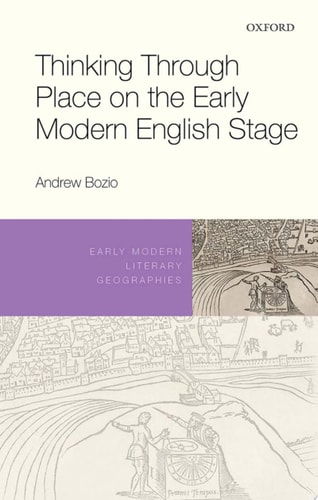
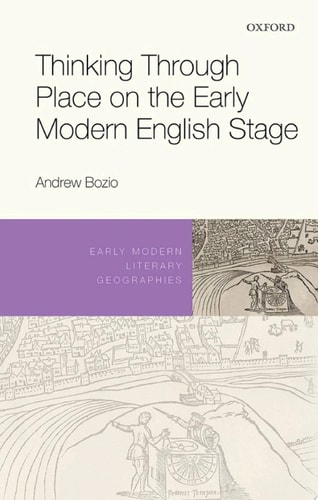
Thinking Through Place on the Early Modern English Stage argues that environment and embodied thought continually shaped one another in the performance of early modern English drama. It demonstrates this, first, by establishing how characters think through their surroundings — not only how they orient themselves within unfamiliar or otherwise strange locations, but also how their environs function as the scaffolding for perception, memory, and other forms of embodied thought. It then contends that these moments of thinking through place theorise and thematise the work that playgoers undertook in reimagining the stage as the setting of the dramatic fiction. By tracing the relationship between these two registers of thought in such plays as The Malcontent, Dido Queen of Carthage, Tamburlaine, King Lear, The Knight of the Burning Pestle, and Bartholomew Fair, this book shows that drama makes visible the often invisible means by which embodied subjects acquire a sense of their surroundings. It also reveals how, in doing so, theatre altered the way that playgoers perceived, experienced, and imagined place in early modern England.
Menrva's Summary
THE THESIS
This book investigates how the interaction between environment and embodied cognition functions as a central mechanism in the performance and reception of early modern English drama. Andrew Bozio, a scholar of early modern literature, utilizes cognitive theory and historical geography to argue that dramatic settings serve as more than mere backdrops. He posits that these environments act as essential scaffolding for character perception and memory, while simultaneously prompting playgoers to actively reimagine the stage as a fictional space.
THE SCOPE MAP
What You Will Find
- Analysis of cognitive processes like perception and memory in relation to physical surroundings.
- Examination of plays including The Malcontent, Dido Queen of Carthage, Tamburlaine, King Lear, The Knight of the Burning Pestle, and Bartholomew Fair.
- Theoretical framework linking embodied cognition to theatrical performance.
Scope Limits
- The study focuses specifically on early modern English drama and does not extend to later theatrical periods or non-English dramatic traditions.
THE AUTHORITY PERSPECTIVE
Scholars in the field of early modern studies recognize this work as a significant contribution to the intersection of cognitive science and literary geography. Readers frequently note the academic density of the prose, which is intended for an audience familiar with both performance theory and historical dramatic texts.
Page Count:
240
Publication Date:
2020-01-01
Publisher:
OUP Oxford
ISBN-10:
019258572X
ISBN-13:
9780192585721
English
Literary Criticism
English & College Success
Theater History
Geography
English literature
Early Modern