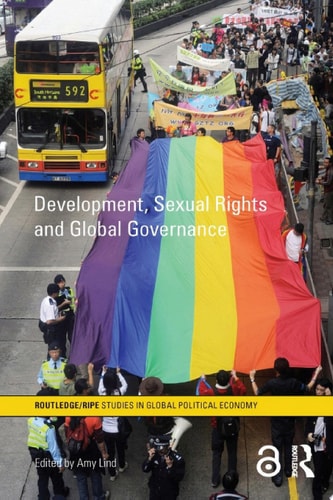
Development, Sexual Rights and Global Governance
0
0
As an Amazon Associate and affiliate partner, Menrva Books earns from qualifying purchases. Learn more
Author Description
This book addresses how sexual practices and identities are imagined and regulated through development discourses and within institutions of global governance. The underlying premise of this volume is that the global development industry plays a central role in constructing people’s sexual lives, access to citizenship, and struggles for livelihood. Despite the industry’s persistent insistence on viewing sexuality as basically outside the realm of economic modernization and anti-poverty programs, this volume brings to the fore heterosexual bias within macroeconomic and human rights development frameworks. The work fills an important gap in understanding how people’s intimate lives are governed through heteronormative policies which typically assume that the family is based on blood or property ties rather than on alternative forms of kinship. By placing heteronormativity at the center of analysis, this anthology thus provides a much-needed discussion about the development industry’s role in pathologizing sexual deviance yet also, more recently, in helping make visible a sexual rights agenda. Providing insights valuable to a range of disciplines, this book will be of particular interest to students and scholars of Development Studies, Gender Studies, and International Relations. It will also be highly relevant to development practitioners and international human rights advocates. The Open Access version of this book, available at http://www.taylorfrancis.com/books/e/9780203868348, has been made available under a Creative Commons Attribution-Non Commercial-No Derivatives 4.0 license.
Menrva's Summary
THE THESIS
This book investigates the intricate relationship between global development discourses, institutions of global governance, and the regulation of sexual practices and identities. The volume posits that the global development industry significantly shapes individuals' sexual lives, their access to citizenship, and their struggles for survival. It challenges the industry's tendency to segregate sexuality from economic modernization and poverty reduction programs, instead highlighting the inherent heteronormative bias within macroeconomic and human rights development frameworks. By centering heteronormativity in its analysis, the book critically examines how people's intimate lives are governed by policies that often assume a singular model of kinship, while also exploring the recent emergence of a sexual rights agenda within development initiatives.
THE SCOPE MAP
- Analysis of how development discourses construct and regulate sexual practices and identities.
- Examination of the role of global governance institutions in shaping sexual lives.
- Critique of the heteronormative bias within macroeconomic and human rights development frameworks.
- Exploration of the impact of development policies on citizenship and livelihood struggles.
- Discussion of how development frameworks typically assume a singular model of kinship.
- Investigation into the pathologization of sexual deviance by the development industry.
- Analysis of the recent emergence and visibility of a sexual rights agenda within development.
- Insights for students and scholars of Development Studies, Gender Studies, and International Relations.
THE AUTHORITY PERSPECTIVE
This volume is recognized for its critical examination of how global development frameworks intersect with and regulate sexuality, filling a notable gap in academic discourse. It is particularly valued for bringing to the fore the often-overlooked heteronormative assumptions embedded within economic and human rights policies. The book is considered essential reading for those seeking to understand the complex governance of intimate lives through development institutions. Its interdisciplinary approach makes it relevant to scholars and practitioners across Development Studies, Gender Studies, and International Relations.
Page Count:
240
Publication Date:
2010-01-04
Publisher:
Routledge
ISBN-10:
1135244596
ISBN-13:
9781135244590
Philosophy
Non-Fiction
Politics
Sexuality Studies
Gender Studies
International relations
Human rights
Gay Rights
Sociology
Globalization
Sexual Rights
Community Tags
Other Editions(5)



Similar Books









Reader Comments
Share Your Thoughts
No comments yet. Be the first to share your thoughts!