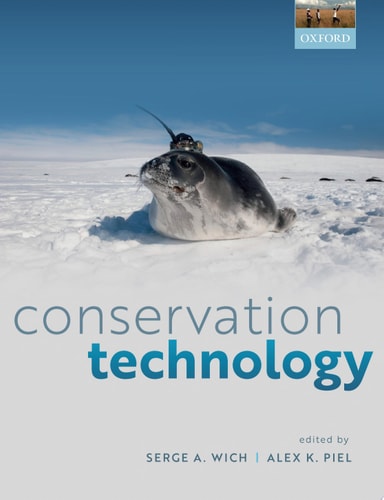
Conservation Technology
0
0
As an Amazon Associate and affiliate partner, Menrva Books earns from qualifying purchases. Learn more
Author Description
The global loss of biodiversity is occurring at an unprecedented pace. Despite the considerable effort devoted to conservation science and management, we still lack even the most basic data on the distribution and density of the majority of plant and animal species, which in turn hampers our efforts to study changes over time. In addition, we often lack behavioural data from the very animals most influenced by environmental changes; this is largely due to the financial and logistical limitations associated with gathering scientific data on species that are cryptic, widely distributed, range over large areas, or negatively influenced by human presence. To overcome these limitations, conservationists are increasingly employing technology to facilitate such data collection. Innovative solutions have been driven by dramatic advances in the conservation-technology interface. The use of camera traps, acoustic sensors, satellite data, drones, and computer algorithms to analyse the large datasets collected are all becoming increasingly widespread. Although specialist books are available on some of these individual technologies, this is the first comprehensive text to describe the breadth of available technology for conservation and to evaluate its varied applications, bringing together a team of international experts using a diverse range of approaches. Conservation Technology is suitable for graduate level students, professional researchers, practitioners and field managers in the fields of ecology and conservation biology.
Menrva's Summary
THE THESIS
This text investigates how emerging technological tools can overcome traditional logistical and financial barriers to data collection in biodiversity conservation. The authors, a team of international experts, synthesize current methodologies to address the critical lack of distribution and density data for plant and animal species. By evaluating the integration of hardware and software solutions, the book provides a framework for modernizing field research and management practices.
THE SCOPE MAP
What You Will Find
- Applications of camera traps and acoustic sensors for wildlife monitoring
- Integration of satellite imagery and drone technology in habitat assessment
- Use of computer algorithms for processing large-scale ecological datasets
- Case studies demonstrating the efficacy of technological interventions
Scope Limits
- Does not provide exhaustive technical manuals for specific proprietary software
- Does not cover policy-making or political advocacy strategies
THE AUTHORITY PERSPECTIVE
Experts identify this work as a foundational text for graduate students and field practitioners seeking a comprehensive overview of the conservation-technology interface. Readers frequently note the academic density of the prose, which serves as a rigorous reference for professionals in ecology and conservation biology.
Page Count:
842
Publication Date:
2021-01-01
Publisher:
OUP Oxford
ISBN-10:
0192590847
ISBN-13:
9780192590848
Science
Nature
Conservation Biology
Field Research
Technology
Ecology
Community Tags
Similar Books