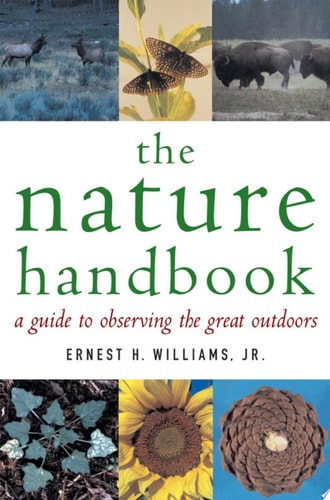
Nature Handbook: A Guide to Observing the Great Outdoors
0
0
As an Amazon Associate and affiliate partner, Menrva Books earns from qualifying purchases. Learn more
Author Description
Nature Is Full Of Fascinating Stories, Stories That Attract Our Attention At A Young Age And Keep Us Amazed Throughout Our Entire Lives. The Need To Understand Nature Draws Us Back To Its Simple Beauty Again And Again, Yet Underneath This Simplicity Lies A Complex Web Of Associations And Patterns. The Nature Handbook Does What No Other Field Guide Does: Explores And Explains Nature Through These Connecting Patterns, Revealing Them To The Many Different Types Of Nature Lovers. All Naturalists-- From Birders To Gardeners, Hikers To Environmentalists, Wildflower Enthusiasts To Butterfliers-- Will Appreciate The Different Approach Of The Handbook, Even Those Whose Interest In The Natural World Is Just Beginning To Develop. Naturalists Who Are Already Well Versed In One Group Of Organisms--birders, For Example--will Find New Explanations And Patterns For Their Favorite Group, As Well As New Patterns All Around Them That They Had Previously Overlooked. Observations In The Handbook Are Arranged In The Three Main Sections Of Plants, Animals, And Habitats. These Sections Are Then Connected Through Discussions Of The Relationship Of Size And Shape, Adaptations, Distribution Patterns, Behavior, And Diversity Of Life. Since The Emphasis Is On Patterns Rather Than Individual Species, Each Chapter Has Cross-references To Related Topics. For Example, Tree-related Topics Such As Leaf Shape, Treelines, And Fall Colors, Are All Discussed In Different Chapters Even Though They Are Related. Leaf Shape Is Associated With Trees As Organisms, And Therefore Is In Chapter 2: Trees; Treelines Are Most Associated With Mountains, So Their Description Is In Chapter 8: Mountains; Fall Colors Apply More Broadly To Forests Than To Individual Trees, And They Are Discussed In Chapter 9,forests. Approximately 500 Color Photographs Help Make The More Than 200 Patterns Apparent And Recognizable For Readers, And Each Pattern Is Accompanied By A Detailed Description And A Brief List Of Sources.
Menrva's Summary
THE THESIS
This book investigates the underlying ecological patterns and interconnected systems that govern the natural world rather than focusing solely on individual species identification. Ernest H. Williams Jr., a biologist and educator, utilizes his extensive background in ecology to provide a framework for understanding how size, shape, behavior, and distribution link disparate elements of the environment. The text argues that by recognizing these recurring patterns, observers can gain a deeper comprehension of biological diversity and habitat dynamics.
THE SCOPE MAP
What You Will Find
- Categorization of natural phenomena into three primary sections: plants, animals, and habitats.
- Analysis of ecological relationships including size, shape, adaptation, and behavioral patterns.
- A cross-referencing system that links related topics across different chapters to demonstrate environmental connectivity.
- Over 500 color photographs illustrating more than 200 distinct biological and environmental patterns.
THE AUTHORITY PERSPECTIVE
Readers frequently note the accessibility of the prose, which bridges the gap between casual observation and scientific inquiry. Experts highlight this as a useful reference for naturalists seeking to move beyond basic species identification toward a more holistic understanding of ecological systems.
Page Count:
288
Publication Date:
2005-01-01
Publisher:
Oxford University Press, Incorporated
ISBN-10:
0199720754
ISBN-13:
9780199720750
Nature
Science
Ecology
Reference
Field Guide
Nature
Community Tags
Similar Books