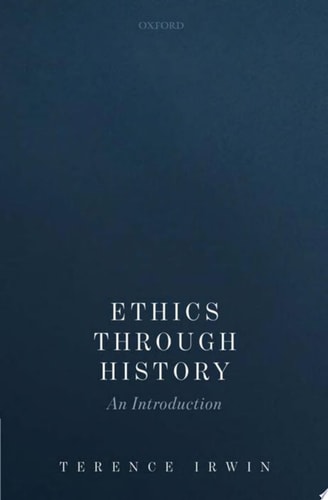
Ethics Through History
0
0
As an Amazon Associate and affiliate partner, Menrva Books earns from qualifying purchases. Learn more
Author Description
What Is The Human Good? What Are The Primary Virtues That Make A Good Person? What Makes An Action Right? Must We Try To Maximize Good Consequences? How Can We Know What Is Right And Good? Can Morality Be Rationally Justified? In Ethics Through History, Terence Irwin Addresses Such Fundamental Questions, Making These Central Debates Intelligible To Readers Without An Extensive Background In Philosophy. He Provides A Historical And Philosophical Discussion Of Major Questions And Key Philosophers In The History Of Ethics, In The Tradition That Begins With Socrates Onwards. Irwin Covers Ancient, Medieval, And Modern Moral Philosophers Whose Views Have Helped To Form The Agenda For Contemporary Ethical Theory, Paying Attention To The Strengths And Weaknesses Of Their Respective Positions.
Menrva's Summary
THE THESIS
This book investigates the fundamental questions of moral philosophy by tracing the evolution of ethical inquiry from the Socratic tradition through the modern era. Terence Irwin, a distinguished scholar in the history of philosophy, utilizes a chronological framework to examine how major thinkers have defined the human good, the nature of virtue, and the rational justification of morality. By analyzing the arguments of key figures across ancient, medieval, and modern periods, the text clarifies how these historical debates continue to shape contemporary ethical discourse.
THE SCOPE MAP
What You Will Find
- A comprehensive survey of moral philosophy from Socrates to modern thinkers.
- Analysis of central ethical questions regarding virtue, consequences, and moral justification.
- Comparative evaluations of the strengths and weaknesses of various philosophical positions.
Scope Limits
- The text does not provide an exhaustive encyclopedia of every minor ethical theorist.
- It does not focus on applied ethics or contemporary policy debates outside of their theoretical foundations.
THE AUTHORITY PERSPECTIVE
Experts recognize this work as a highly accessible entry point for students and general readers seeking to understand the historical development of ethical theory. Readers frequently note that the prose remains clear and pedagogical despite the inherent complexity of the philosophical subject matter.
Page Count:
336
Publication Date:
2020-01-01
Publisher:
Oxford University Press
ISBN-10:
0192597817
ISBN-13:
9780192597816
Philosophy
Non-Fiction
Philosophy history
Moral Philosophy
Ethics
Community Tags
Similar Books