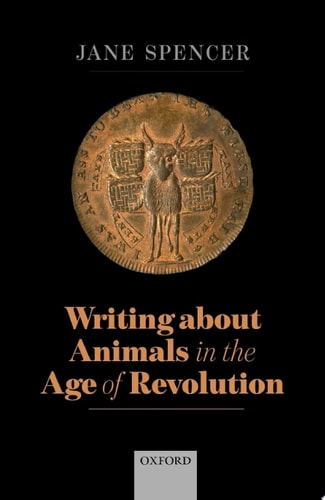
Writing About Animals in the Age of Revolution
0
0
As an Amazon Associate and affiliate partner, Menrva Books earns from qualifying purchases. Learn more
Author Description
What did British people in the late eighteenth century think and feel about their relationship to nonhuman animals? This book shows how an appreciation of human-animal similarity and a literature of compassion for animals developed in the same years during which radical thinkers were first basing political demands on the concept of natural and universal human rights. Some people began to conceptualise animal rights as an extension of the rights of man and woman. But because oppressed people had to insist on their own separation from animals in order to claim the right to a full share in human privileges, the relationship between human and animal rights was fraught and complex. This book examines that relationship in chapters covering the abolition movement, early feminism, and the political reform movement. Donkeys, pigs, apes and many other literary animals became central metaphors within political discourse, fought over in the struggle for rights and freedoms; while at the same time more and more writers became interested in exploring the experiences of animals themselves. We learn how children's writers pioneered narrative techniques for representing animal subjectivity, and how the anti-cruelty campaign of the early 1800s drew on the legacy of 1790s radicalism. Coleridge, Wordsworth, Clare, Southey, Blake, Wollstonecraft, Equiano, Dorothy Kilner, Thomas Spence, Mary Hays, Ignatius Sancho, Anna Letitia Barbauld, John Oswald, John Lawrence, and Thomas Erskine are just a few of the writers considered. Along with other canonical and non-canonical writers of many disciplines, they placed nonhuman animals at the heart of British literature in the age of the French Revolution.
Menrva's Summary
THE THESIS
This book investigates how British writers during the late eighteenth century navigated the complex intersection between the emerging discourse of universal human rights and the developing empathy for nonhuman animals. Jane Spencer, a scholar of eighteenth-century literature, utilizes a wide array of canonical and non-canonical texts to argue that animals functioned as critical metaphors in the political struggles of the age, including abolitionism and early feminism. She examines how the conceptualization of animal rights was simultaneously bolstered and complicated by the political necessity of defining human identity against the animal kingdom.
THE SCOPE MAP
What You Will Find
- Analysis of the relationship between 1790s radicalism and the early 1800s anti-cruelty movement.
- Examination of literary representations of animals in the works of Coleridge, Wordsworth, Wollstonecraft, and others.
- Exploration of narrative techniques used by children's writers to depict animal subjectivity.
- Discussion of how political figures like Thomas Erskine and John Lawrence integrated animal welfare into reformist discourse.
Scope Limits
- The study is primarily focused on British literature and political thought, excluding broader global perspectives on animal rights during this period.
- The text does not provide a comprehensive history of animal husbandry or agricultural practices, focusing instead on the literary and political conceptualization of animals.
THE AUTHORITY PERSPECTIVE
Scholars in the field of eighteenth-century studies and animal humanities identify this work as a significant contribution to understanding the cultural history of rights discourse. Readers frequently note the depth of the archival research and the clarity with which the author connects literary analysis to political history.
Page Count:
305
Publication Date:
2020-01-01
Publisher:
OUP Oxford
ISBN-10:
019259947X
ISBN-13:
9780192599476
History
Indigenous
British literature
In literature
Animal Studies
English literature
18th century
Literary Criticism
Political Philosophy
Community Tags
Similar Books