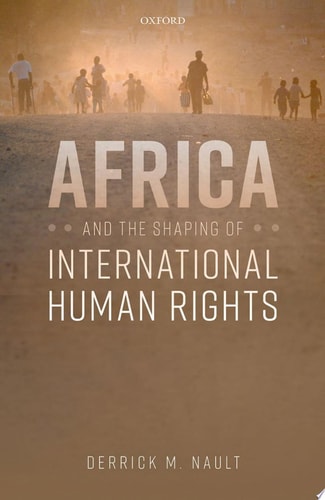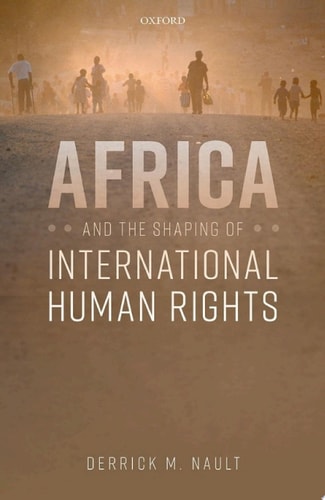
Africa and the Shaping of International Human Rights
0
0
As an Amazon Associate and affiliate partner, Menrva Books earns from qualifying purchases. Learn more
Author Description
Africa throughout its postcolonial history has been plagued by human rights abuses ranging from intolerance of political dissent to heinous crimes such as genocide. Some observers consequently have gone so far as to suggest that human rights are a concept alien to African cultures. The International Criminal Court (ICC)'s focus on Africa in recent years has reinforced the region's reputation as a hotspot for human rights violations. But despite Africa's notoriety concerning human rights, Africa and the Shaping of International Human Rights argues that the continent has been pivotal in helping to shape contemporary human rights norms and practices. Challenging prevailing Eurocentric interpretations of human rights' origins and evolution, it demonstrates that from the colonial era to the present Africa's peoples have drawn attention to and prompted novel ways of thinking about human rights through their encounters with the world at large. Beginning with the depredations of King Leopold II in the Congo Free State in the 1880s and ending with the ICC's current activities in Africa, it reveals how African events, personalities, groups, and nations have influenced the trajectory of human rights history in intriguing and critical ways, in the end enlarging and universalizing a major discourse of our time.
Menrva's Summary
THE THESIS
How has the African continent influenced the development and universalization of international human rights norms throughout the postcolonial era? Derrick M. Nault, a scholar of international relations and human rights, challenges the prevailing Eurocentric narrative that positions human rights as a concept foreign to African cultures. By analyzing historical events from the late 19th century to the present, Nault argues that African nations, activists, and specific historical figures have been central agents in defining and expanding the scope of global human rights discourse.
THE SCOPE MAP
What You Will Find
- Historical analysis of human rights developments from the 1880s Congo Free State to modern International Criminal Court activities.
- Examination of the intersection between colonial legacies and contemporary human rights frameworks.
- Case studies of African personalities and political movements that shaped international legal norms.
Scope Limits
- The text does not provide an exhaustive legal manual for current human rights litigation.
- It does not focus on internal domestic policy outside of its relation to international human rights norms.
THE AUTHORITY PERSPECTIVE
Scholars and historians recognize this work as a significant contribution to decolonizing the history of international law. Readers frequently note the academic rigor of the text, which serves as a critical resource for those studying the intersection of global politics and regional history.
Page Count:
259
Publication Date:
2020-01-01
Publisher:
OUP Oxford
ISBN-10:
019260337X
ISBN-13:
9780192603371
History
Human rights
African history
International relations