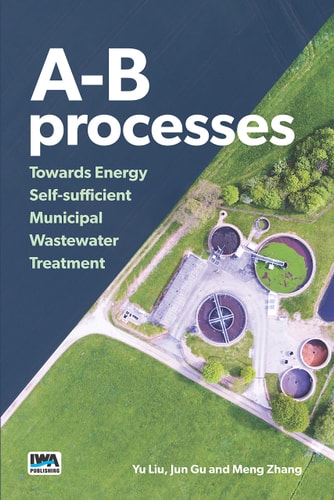
A-B Processes: Towards Energy Self-sufficient Municipal Wastewater Treatment
0
0
As an Amazon Associate and affiliate partner, Menrva Books earns from qualifying purchases. Learn more
Author Description
The principle of the conventional activated sludge (CAS) for municipal wastewater treatment is primarily based on biological oxidation by which organic matters are converted to biomass and carbon dioxide. After more than 100 years’ successful application, the CAS process is receiving increasing critiques on its high energy consumption and excessive sludge generation. Currently, almost all municipal wastewater treatment plants with the CAS as a core process are being operated in an energy-negative fashion. To tackle such challenging situations, there is a need to re-examine the present wastewater treatment philosophy by developing and adopting novel process configurations and emerging technologies. The solutions going forward should rely on the ways to improve direct energy recovery from wastewater, while minimizing in-plant energy consumption. This book begins with a critical overview of the energy situation and challenges in current municipal wastewater treatment plants, showing the necessity of the paradigm shift from removal to recovery in terms of energy and resource. As such, the concept of A-B process is discussed in detail in the book. It appears that various A-B process configurations are able to provide possible engineering solutions in which A-stage is primarily designed for COD capture with the aim for direct anaerobic treatment without producing excessive biosludge, while B-stage is designated for nitrogen removal. Making the wastewater treatment energy self-sustainable is obviously of global significance and eventually may become a game changer for the global market of the municipal wastewater reclamation technology. The principal audiences include practitioners, professionals, university researchers, undergraduate and postgraduate students who are interested and specialized in municipal wastewater treatment and process design, environmental engineering, and environmental biotechnology.
Menrva's Summary
THE THESIS
The conventional activated sludge process for municipal wastewater treatment faces significant challenges due to high energy consumption and excessive sludge generation, necessitating a paradigm shift towards energy recovery and minimized in-plant energy use. This book critically examines the energy situation in current wastewater treatment plants, advocating for a transition from removal to recovery of energy and resources. It details the A-B process, a configuration designed to capture Chemical Oxygen Demand (COD) in the A-stage for direct anaerobic treatment with minimal biosludge, while the B-stage focuses on nitrogen removal. The development of energy self-sustainable wastewater treatment is presented as a globally significant endeavor with the potential to transform the municipal wastewater reclamation technology market.
THE SCOPE MAP
- Critical overview of the energy situation and challenges in current municipal wastewater treatment plants.
- Discussion of the necessity for a paradigm shift from removal to recovery in energy and resources.
- Detailed explanation of the A-B process concept.
- Analysis of A-stage design for COD capture and direct anaerobic treatment with reduced biosludge.
- Explanation of B-stage designation for nitrogen removal.
- Exploration of engineering solutions for energy self-sustainable wastewater treatment.
- Discussion of the global significance and market impact of energy self-sustainable wastewater reclamation technology.
THE AUTHORITY PERSPECTIVE
The book is aimed at practitioners, professionals, university researchers, and students specializing in municipal wastewater treatment, process design, environmental engineering, and environmental biotechnology. It addresses the pressing need for more energy-efficient and resource-recovering wastewater treatment methods. The A-B process is presented as a viable engineering solution to overcome the limitations of conventional activated sludge systems. The work underscores the global importance of achieving energy self-sustainability in wastewater treatment.
Page Count:
180
Publication Date:
2019-11-15
Publisher:
IWA Publishing
ISBN-10:
1789060079
ISBN-13:
9781789060072
Non-Fiction
Science
Biotechnology
Community Tags
Other Editions(2)
Similar Books



Reader Comments
Share Your Thoughts
No comments yet. Be the first to share your thoughts!