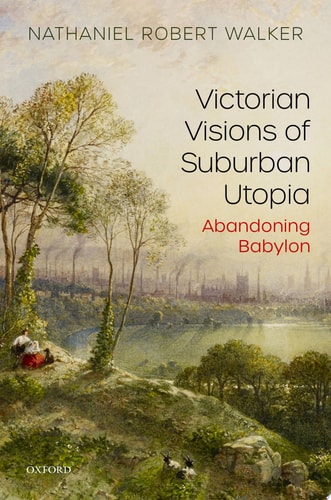
Victorian Visions of Suburban Utopia
0
0
As an Amazon Associate and affiliate partner, Menrva Books earns from qualifying purchases. Learn more
Author Description
The Rise Of Suburbs And Disinvestment From Cities Have Been Defining Features Of Life In Many Countries Over The Course Of The Twentieth Century. In Victorian Visions Of Suburban Utopia, Nathaniel Walker Asks: Why Did We Abandon Our Dense, Complex Urban Places And Seek To Find The Best Of The City And The Country In The Flowery Suburbs? While Looking Back At The Architecture And Urban Design Of The 1800s Offers Some Answers, Walker Argues That A Great Missing Piece Of The Story Can Be Found In Victorian Utopian Literature. The Replacement Of Cities With High-tech Suburbs Was Repeatedly Imagined And Breathlessly Described In The Socialist Dreams And Science-fiction Fantasies Of Dozens Of British And American Authors. Some Of These Visionaries — Such As Robert Owen, Edward Bulwer-lytton, Edward Bellamy, William Morris, Ebenezer Howard, And H. G. Wells — Are Enduringly Famous, While Others Were Street Vendors Or Amateur Chemists Who Have Been All But Forgotten. Together, They Fashioned Strange And Beautiful Imaginary Worlds Built Of Synthetic Gemstones, Lacy Metal Colonnades, And Unbreakable Glass, Staffed By Robotic Servants And Teeming With Flying Carriages. As Varied As Their Futuristic Visions Could Be, Walker Reveals How Most Of Them Were Unified By A Single, Desperate Plea: For Humanity To Have A Future Worth Living, We Must Abandon Our Smoky, Poor, Chaotic Babylonian Cities For A Life In Shimmering Gardens.
Menrva's Summary
THE THESIS
Why did society shift from dense urban centers toward the development of suburban environments during the twentieth century? Nathaniel Robert Walker, an architectural historian, investigates this transition by analyzing Victorian utopian literature. He argues that the modern suburban ideal was not merely a practical response to industrialization but a deliberate construct imagined by nineteenth-century writers who sought to replace chaotic cities with technologically advanced, garden-like residential enclaves.
THE SCOPE MAP
What You Will Find
- Analysis of utopian literature from British and American authors including H. G. Wells, William Morris, and Edward Bellamy.
- Examination of architectural motifs such as synthetic materials, glass structures, and early concepts of automated labor.
- Historical context linking nineteenth-century speculative fiction to twentieth-century urban planning trends.
Scope Limits
- The study focuses primarily on the influence of literature on urban design rather than the economic or political realities of suburban development.
- It does not provide a comprehensive history of actual suburban construction projects.
THE AUTHORITY PERSPECTIVE
Scholars and urban historians identify this work as a significant contribution to the intersection of literary studies and architectural history. Readers frequently note the meticulous research into obscure authors alongside canonical figures, providing a fresh perspective on the origins of modern suburbanization.
Page Count:
432
Publication Date:
2020-01-01
Publisher:
Oxford University Press
ISBN-10:
0192605860
ISBN-13:
9780192605863
Architecture
History
Social History
Literary Criticism
urban planning
Community Tags
Other Editions(2)
Similar Books