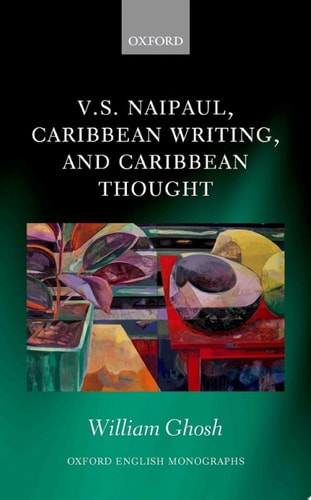
V.S. Naipaul, Caribbean Writing, and Caribbean Thought
0
0
As an Amazon Associate and affiliate partner, Menrva Books earns from qualifying purchases. Learn more
Author Description
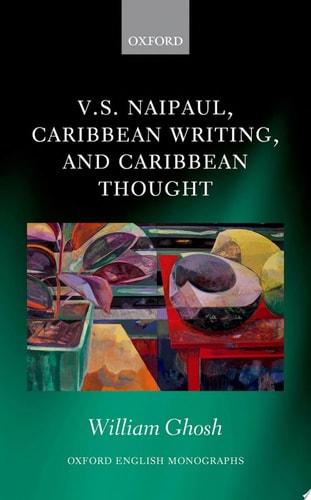
V.S. Naipaul was one of the most influential and controversial writers of the twentieth century. His writings on colonialism and its aftermath, on migration and landscape, and on cultural loss and creativity, were both admired and criticised by a wide global audience. But what of his relationship to the region of his birth? Born in Trinidad, of Indian ancestry, and spending his professional life in England, Naipaul could be dismissive of his Caribbean background. He presented himself as a citizen of nowhere, or else, of the globalized, postcolonial world. However, this obscures his intense competition, fierce disagreements and close collaboration with other Caribbean intellectuals, both as a schoolchild in colonial Trinidad, and as an internationally celebrated author. V.S. Naipaul, Caribbean Writing, and Caribbean Thought looks again at Naipaul's relationship with his birthplace. It shows that that the decolonising Caribbean was the crucible in which Naipaul's style and outlook were formed. Moreover, understanding Naipaul's place in the history of the region's politics and letters sheds new light on the work of celebrated contemporaries, Derek Walcott and Kamau Brathwaite, George Lamming and Maryse Condè, Elsa Goveia and Eric Williams, Sylvia Wynter and C.L.R. James. Literary criticism, intellectual biography, and an essay in the history of ideas, this book offers a new account of Caribbean thought in the decades after independence. It reveals a literary culture of creative vibrancy, in an era of unprecedented change.
Menrva's Summary
THE THESIS
This work investigates the complex, often contradictory relationship between V.S. Naipaul and his Caribbean origins, questioning how his birthplace shaped his intellectual development and literary output. William Ghosh, a scholar of postcolonial literature, utilizes archival research and comparative analysis to argue that the decolonizing Caribbean served as the foundational crucible for Naipaul's stylistic and ideological formation. By situating Naipaul within the broader context of regional intellectuals, the book challenges the author's own self-presentation as a detached, globalized citizen.
THE SCOPE MAP
What You Will Find
- Analysis of Naipaul's early life in colonial Trinidad and its influence on his later work.
- Comparative studies of Naipaul alongside contemporaries like Derek Walcott, Kamau Brathwaite, and C.L.R. James.
- Examination of the intersection between literary production and the political history of the post-independence Caribbean.
Scope Limits
- The text does not provide a comprehensive biography of Naipaul's entire life, focusing primarily on his intellectual and regional connections.
- It does not offer an exhaustive critique of Naipaul's later, non-Caribbean-focused works.
THE AUTHORITY PERSPECTIVE
Scholars and critics recognize this monograph as a significant contribution to Caribbean intellectual history, noting its ability to reframe Naipaul's work within a regional rather than purely metropolitan context. Readers frequently highlight the academic density of the prose, which serves as a rigorous examination of postcolonial literary culture.
Page Count:
206
Publication Date:
2020-01-01
Publisher:
OUP Oxford
ISBN-10:
0192605313
ISBN-13:
9780192605313
History
Literary Criticism
Caribbean Studies
Intellectual Biography
Indigenous
History of Ideas
English literature