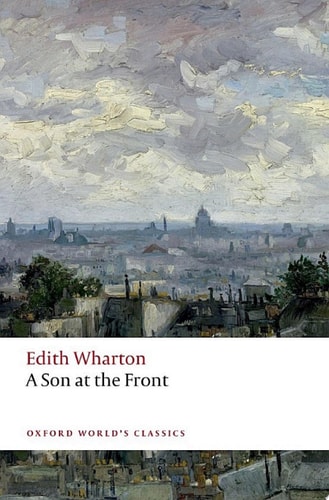
A Son at the Front
0
0
As an Amazon Associate and affiliate partner, Menrva Books earns from qualifying purchases. Learn more
Author Description
'The war went on; life went on; Paris went on.' In A Son at the Front, her only novel dealing with World War I, Edith Wharton offers a vivid portrait of American expatriate life in Paris, as well as a gripping portrayal of a complex modern family. The painter John Campton is divorced from the mother of his son, George, and although Julia's second husband, Anderson Brant, a wealthy banker, has been a devoted stepfather to George, Campton resents his presence in George's life. This family drama is ruptured by the outbreak of fighting, which requires George, born in France, to report for military service despite his parents' belief that he should be exempted. Reflecting Wharton's own experiences, A Son at the Front documents the shock of the outbreak of war, the early hope of a quick victory for the Allies, the terrible human cost of the war, and the relief when, belatedly, the United States enters the conflict. The novel's tone reflects the realities of life in Paris, and the profound disillusionment of the post-war period, standing as not only an important part of Wharton's oeuvre, but a landmark in the literature of the First World War.
Menrva's Summary
THE PULSE
The outbreak of World War I shatters the fragile domestic stability of an American expatriate family living in Paris, forcing a father to confront the imminent danger facing his son. John Campton, a painter, finds his long-standing resentment toward his ex-wife’s wealthy husband eclipsed by the sudden necessity of their son George’s military conscription. As the conflict escalates, the narrative examines the tension between parental protective instincts and the rigid demands of national duty. The story unfolds through a third-person perspective that captures the shifting atmosphere of a city under siege, moving from initial optimism to the grim reality of prolonged warfare.
INSIDE THE PAGES
- Exploration of the American expatriate experience in wartime France
- Examination of complex, fractured family dynamics and step-parental relationships
- Detailed depiction of the social and psychological impact of the First World War
- Contrast between the civilian perception of war and the harsh realities of the front
- Focus on the moral ambiguity of privilege and exemption during national crises
- Stylistic emphasis on the disillusionment of the post-war era
- Integration of personal observations regarding the human cost of global conflict
- Character-driven narrative focusing on the internal evolution of John Campton
THE COLLECTIVE ECHO
Readers and critics frequently highlight the novel's precise observation of the social shifts occurring in Paris during the early twentieth century. Discussion often centers on the nuanced portrayal of parental anxiety and the moral dilemmas faced by those who remain behind the lines. Many observers note that the pacing reflects the slow, grinding nature of the war itself, which serves to heighten the sense of inevitability surrounding the protagonist's struggle. The work is often cited for its ability to capture the specific disillusionment that defined the post-war period, providing a stark look at the intersection of personal life and historical catastrophe.
Page Count:
312
Publication Date:
2023-01-01
Publisher:
OUP Oxford
ISBN-10:
0192603337
ISBN-13:
9780192603333
Literary
War
classic
Family Saga
Historical
Fairy Tales
Community Tags
Other Editions(16)
OUP Oxford
2023
Default edition
Independently Published
2021

Independently Published
2021

Independently Published
2021

Independently Published
2021

Amazon Digital Services LLC - KDP Print US
2020

Independently Published
2020
Bibliotech Press
2020

Independently Published
2020
Independently Published
2020
Independently Published
2020

Martino Fine Books
2019

Amazon Digital Services LLC - KDP Print US
2019
Read Books
2013

Classic Books
2001

G.K. Hall
1996
Similar Books










Reader Comments
Share Your Thoughts
No comments yet. Be the first to share your thoughts!