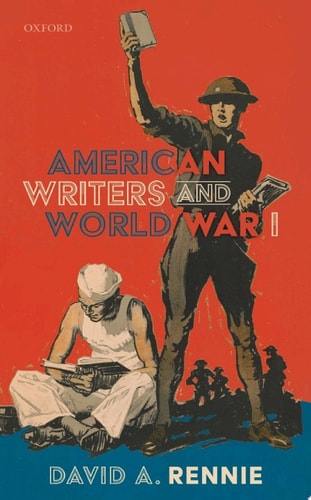
American Writers and World War I
0
0
As an Amazon Associate and affiliate partner, Menrva Books earns from qualifying purchases. Learn more
Author Description
Looking at texts written throughout the careers of Edith Wharton, Ellen La Motte, Mary Borden, Thomas Boyd, F. Scott Fitzgerald, Laurence Stallings, and Ernest Hemingway, American Writers and World War I argues that authors' war writing continuously evolved in response to developments in their professional and personal lives. Recent research has focused on constituencies of identity—such as gender, race, and politics—registered in American Great War writing. Rather than being dominated by their perceived membership of such socio-political categories, this study argues that writers reacted to and represented the war in complex ways which were frequently linked to the exigencies of maintaining a career as a professional author. War writing was implicated in, and influenced by, wider cultural forces such as governmental censorship, the publishing business, advertising, and the Hollywood film industry. American Writers and World War I argues that even authors' hallmark 'anti-war' works are in fact characterized by an awareness of the war's nuanced effects on society and individuals. By tracking authors' war writing throughout their entire careers—in well-known texts, autobiography, correspondence, and neglected works—this study contends that writers' reactions were multifaceted, and subject to change—in response to their developments as writers and individuals. This work also uncovers the hitherto unexplored importance of American cultural and literary precedents which offered writers means of assessing the war. Ultimately, the volume argues, American World War I writing was highly personal, complex, and idiosyncratic.
Menrva's Summary
THE THESIS
This study investigates how the professional and personal trajectories of prominent American authors shaped their literary representations of World War I. David A. Rennie examines the careers of writers such as Ernest Hemingway, Edith Wharton, and F. Scott Fitzgerald to argue that their war-related output was not merely a product of socio-political identity, but a dynamic response to the demands of the publishing industry, censorship, and personal development. By analyzing a broad range of texts, including correspondence and neglected works, the author posits that these writers maintained a complex, evolving engagement with the war throughout their professional lives.
THE SCOPE MAP
What You Will Find
- Analysis of career-long war writing from seven major American authors.
- Examination of external influences including Hollywood, advertising, and government censorship.
- Investigation into the role of American literary precedents in shaping war narratives.
Scope Limits
- The study focuses primarily on the selected group of seven authors rather than a comprehensive survey of all American war literature.
- It does not prioritize socio-political identity categories like race or gender as the primary drivers of the narrative.
THE AUTHORITY PERSPECTIVE
Scholars recognize this work as a significant contribution to the study of American modernism and the intersection of professional authorship with historical trauma. The text is noted for its rigorous archival approach and its ability to challenge traditional readings of canonical anti-war literature.
Page Count:
249
Publication Date:
2020-01-01
Publisher:
OUP Oxford
ISBN-10:
0192602470
ISBN-13:
9780192602473
History
Biography
Literary Criticism
Indigenous
World War
American
Community Tags
Similar Books