Modern American Poetry and the Architectural Imagination: The Harmony of Forms
0
0
As an Amazon Associate and affiliate partner, Menrva Books earns from qualifying purchases. Learn more
Author Description
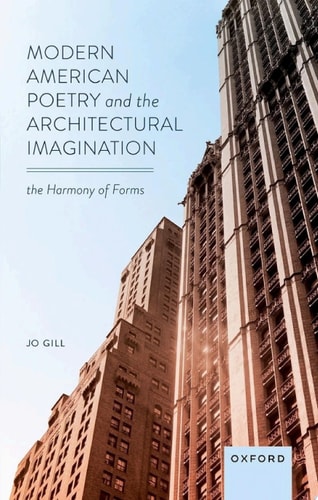
Modern American Poetry and the Architectural Imagination: The Harmony of Forms assesses the relationship between architectural and poetic innovation in the United States across the twentieth century. Taking the work of five key poets as case studies and drawing on the work of a rich range of other writers, architects, artists, and commentators, this study proposes that by examining the sustained and productive—if hitherto overlooked—engagement between the two disciplines, we enrich our understanding of the complexity and interrelationship of both. The book begins by tracing the rise of what was conceived of as 'modern' (and often 'international style') architecture and by showing how poetry and architecture in the early decades of the century developed in dialogue, and within a shared, and often transnational, context. It then moves on to examine the material, aesthetic, and social conditions that helped shape both disciplines, offering new readings of familiar poems and bringing other pertinent resources to light. It considers the uses to which poets of the period put the insights of architecture—and vice versa. In closing, Gill turns to modern and contemporary architects' written accounts of their own practice, in memoirs and other commentaries, and examines how they have assimilated, or resisted, the practice and vision of poetry.
Menrva's Summary
THE THESIS
This study investigates the intersection of architectural and poetic innovation in the United States throughout the twentieth century. Jo Gill, an academic specializing in modern poetry, utilizes a comparative framework to analyze how these two creative disciplines informed one another. By examining the material, aesthetic, and social conditions of the era, the author argues that poetry and architecture developed in a sustained, transnational dialogue that remains under-examined in traditional literary history.
THE SCOPE MAP
What You Will Find
- Analysis of five primary poets as central case studies
- Examination of the 'international style' in architecture and its poetic counterparts
- Integration of primary source material from architects' memoirs and commentaries
- Comparative readings of twentieth-century verse alongside architectural theory
Scope Limits
- The study focuses primarily on the United States context
- It does not provide a comprehensive history of all American poetry or architecture, but rather focuses on specific points of intersection
THE AUTHORITY PERSPECTIVE
Scholars and critics recognize this work as a specialized contribution to interdisciplinary studies, noting its academic rigor and focus on the synthesis of spatial and linguistic forms. Readers frequently highlight the text's ability to bridge the gap between architectural theory and poetic analysis for a scholarly audience.
Page Count:
295
Publication Date:
2023-01-01
Publisher:
OUP Oxford
ISBN-10:
0192638815
ISBN-13:
9780192638816
Poetry
Architecture
History
American
Modernism
Indigenous
Literary Criticism
Community Tags
Similar Books