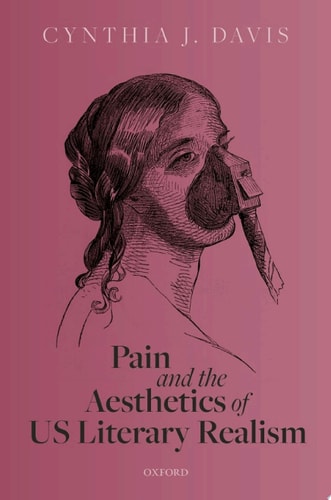
Pain and the Aesthetics of US Literary Realism
0
0
As an Amazon Associate and affiliate partner, Menrva Books earns from qualifying purchases. Learn more
Author Description
The postbellum period saw many privileged Americans pursuing a civilized ideal premised on insulation from pain. Medico-scientific advances in anesthetics and analgesics and emergent religious sects like Christian Science made pain avoidance seem newly possible. The upper classes could increasingly afford to distance themselves from the suffering they claimed to feel more exquisitely than did their supposedly less refined contemporaries and antecedents. The five US literary realists examined in this study resisted this contemporary revulsion from pain without going so far as to join those who celebrated suffering for its invigorating effects. William Dean Howells, Henry James, Edith Wharton, Mark Twain, and Charles Chesnutt embraced the concept of a heightened sensitivity to pain as a consequence of the civilizing process but departed from their peers by delineating alternative definitions of a superior sensibility indebted to suffering. Although the treatment of pain in other influential nineteenth century literary modes including sentimentalism and naturalism has attracted ample scholarly attention, this book offers the first sustained analysis of pain's importance to US literary realism as practiced by five of its most influential proponents.
Menrva's Summary
THE THESIS
How did nineteenth-century American literary realists reconcile the era's cultural obsession with pain avoidance against the necessity of suffering in their creative work? Cynthia J. Davis, a scholar of American literature, investigates the intersection of medical history, religious shifts, and literary theory during the postbellum period. She argues that authors like Howells, James, Wharton, Twain, and Chesnutt utilized pain as a mechanism to define a superior, more refined sensibility, effectively challenging the period's prevailing desire for insulation from physical and emotional distress.
THE SCOPE MAP
What You Will Find
- Analysis of the influence of anesthetics and Christian Science on late nineteenth-century American culture.
- Comparative study of five major literary figures: William Dean Howells, Henry James, Edith Wharton, Mark Twain, and Charles Chesnutt.
- Examination of the 'civilizing process' and its relationship to heightened sensitivity.
Scope Limits
- The study does not provide an exhaustive survey of all American realist authors of the era.
- The analysis excludes a detailed comparison with contemporary European realist movements.
THE AUTHORITY PERSPECTIVE
Scholars recognize this work as a significant contribution to the study of American realism, specifically for its focus on the neglected theme of physical and emotional pain. The text is noted for its academic rigor and its ability to bridge the gap between medical history and literary analysis.
Page Count:
242
Publication Date:
2021-01-01
Publisher:
OUP Oxford
ISBN-10:
0192602365
ISBN-13:
9780192602367
History
Indigenous
Cultural History
Nineteenth century
Realism
19th Century
Literary Criticism
In literature
American