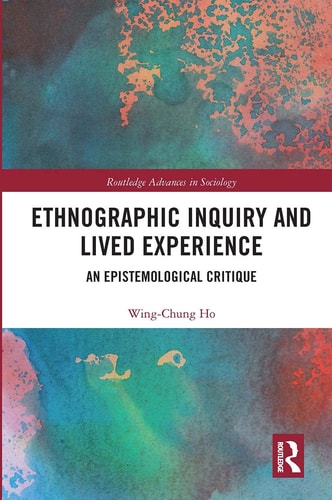
Ethnographic Inquiry and Lived Experience: An Epistemological Critique
0
0
As an Amazon Associate and affiliate partner, Menrva Books earns from qualifying purchases. Learn more
Author Description
Ho addresses two fundamental theoretical questions about how best to practice ethnographic inquiries to obtain qualitative, experience-near, and shareable accounts of human living. The first question is regarding the epistemology of ethnography. Ho posits that writing is epistemologically prior to the researcher's fieldwork experience in the production of ethnographic knowledge. This stance is developed using the theories of hermeneutics put forward by Paul Ricoeur and Hans-Georg Gadamer who both consider that once a text is produced, its meaning is dissociated from the intention of the author. The second question is: what is the putative object that the ethnographer writes about? Ho argues that "lived experience" (Erlebnis) offers such an ethnographic object. Since the lived experience that an ethnographer experiences during fieldwork cannot be studied directly, further theorizations of lived experience are necessary. Ho underscores both the non-discursivity and transcendence of lived experience in the lifeworld, and the way power is clandestinely imbued in everyday life in shaping subjectivity and practice. This theorization brings together Alfred Schutz's lifeworld theory and Michel Foucault's power/knowledge nexus. The result is a general theory of experience that is pertinent for ethnographic inquiries. By addressing these two fundamental questions and offering novel angles from which to answer them, this book offers refreshed epistemological guidelines for conducting ethnographic research for scientific reasoning. More importantly, this book also provides a crucial knowledge base for comprehending the current epistemological debates inherent in the production of ethnographic knowledge and furthering discussions in the field.
Menrva's Summary
THE THESIS
This book critically examines the epistemological foundations of ethnographic inquiry and proposes a theoretical framework for understanding 'lived experience' as its central object. The author, Clara Wing-chung Ho, addresses two core questions: the epistemology of ethnography and the nature of its object of study. Ho argues that writing precedes fieldwork in knowledge production, drawing on hermeneutic theories from Ricoeur and Gadamer. The book further posits 'lived experience' (Erlebnis) as the ethnographic object, integrating Schutz's lifeworld theory with Foucault's power/knowledge nexus to account for its non-discursivity, transcendence, and the influence of power in shaping subjectivity.
THE SCOPE MAP
- An epistemological critique of ethnographic research practices.
- A theoretical exploration of 'lived experience' (Erlebnis) as the object of ethnographic study.
- Application of hermeneutic theories from Paul Ricoeur and Hans-Georg Gadamer.
- Integration of Alfred Schutz's lifeworld theory with Michel Foucault's power/knowledge nexus.
- Analysis of the non-discursivity and transcendence of lived experience.
- Discussion on how power shapes subjectivity and practice within everyday life.
- Refreshed epistemological guidelines for conducting ethnographic research.
THE AUTHORITY PERSPECTIVE
The book offers a rigorous theoretical engagement with the core tenets of ethnographic research, providing novel angles on epistemology and the concept of lived experience. By synthesizing key philosophical and sociological theories, it aims to equip researchers with a more nuanced understanding of knowledge production in the field. The work is positioned to contribute significantly to ongoing debates within anthropological and sociological methodology. It provides a crucial knowledge base for comprehending current epistemological discussions and furthering the field of ethnographic inquiry.
Page Count:
204
Publication Date:
2020-09-30
Publisher:
Taylor & Francis Group
ISBN-10:
0367662957
ISBN-13:
9780367662950
Non-Fiction
Philosophy
Social Science
Research Methods
Anthropology
Community Tags
Similar Books