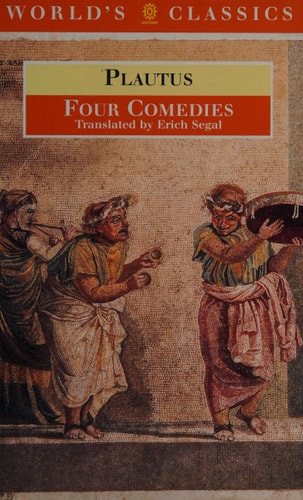
Four Comedies: The Braggart Soldier; The Brothers Menaechmus; The Haunted House; The Pot of Gold
0
0
As an Amazon Associate and affiliate partner, Menrva Books earns from qualifying purchases. Learn more
Author Description
Plautus was the single greatest influence on Western comedy. Shakespeare's Comedy of Errors and Molière's The Miser are two subsequent classics directly based on Plautine originals. Plautus himself borrowed from the Greeks, but his jokes, rapid dialogue, bawdy humour, and irreverent characterizations are the original work of an undisputed genius. The comedies printed here show him at his best, and professor Segal's translations keep their fast, rollicking pace intact, making these the most readable and actable versions available. His introduction considers Plautus' place in ancient comedy, examines his continuing influence, and celebrates his power to entertain. ABOUT THE SERIES: For over 100 years Oxford World's Classics has made available the widest range of literature from around the globe. Each affordable volume reflects Oxford's commitment to scholarship, providing the most accurate text plus a wealth of other valuable features, including expert introductions by leading authorities, helpful notes to clarify the text, up-to-date bibliographies for further study, and much more.
Menrva's Summary
THE PULSE
These four plays center on the chaotic social entanglements and farcical misunderstandings that arise when deception, greed, and mistaken identities collide. The protagonist in each play navigates a world defined by rigid social hierarchies and domestic absurdity, often relying on clever servants or improbable coincidences to resolve their predicaments. Plautus utilizes a framework of stock characters—the braggart, the miser, the trickster—to expose the vulnerabilities of his Roman audience. The narrative structure relies on rapid-fire dialogue and physical comedy to propel the plot toward inevitable, often raucous, resolutions.
INSIDE THE PAGES
- Use of stock character archetypes
- Fast-paced, rhythmic dialogue
- Frequent employment of dramatic irony
- Focus on domestic and social satire
- Integration of bawdy humor and wordplay
- Exploration of themes regarding wealth and status
- Non-linear plot complications involving mistaken identity
- Direct address to the audience in prologues
THE COLLECTIVE ECHO
Discussion often centers on the enduring influence of Plautus on the evolution of Western comedic structure and character development. Readers frequently highlight the accessibility of these translations, noting that the prose maintains the energy and wit required for stage performance. Critics often examine how the plays balance slapstick humor with sharp social commentary regarding the Roman class system. The collection is widely regarded as a foundational resource for understanding the roots of modern farce and situational comedy. Scholars emphasize the importance of these texts in tracing the lineage of comedic tropes from antiquity to the works of Shakespeare and Molière.
Page Count:
288
Publication Date:
2008-01-01
Publisher:
OUP Oxford
ISBN-10:
0192638017
ISBN-13:
9780192638014
Drama
Classics
Humanities
Comedy
Theatre
Special Topics
English drama
Plays
Ancient