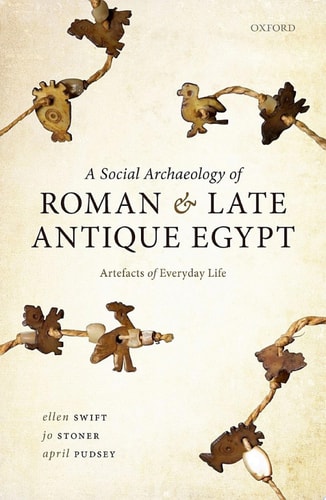
A Social Archaeology of Roman and Late Antique Egypt: Artefacts of Everyday Life
0
0
As an Amazon Associate and affiliate partner, Menrva Books earns from qualifying purchases. Learn more
Author Description
Artefact evidence has the unique power to illuminate many aspects of life that are rarely explored in written sources, yet this potential has been underexploited in research on Roman and Late Antique Egypt. This book presents the first in-depth study that uses everyday artefacts as its principal source of evidence to transform our understanding of the society and culture of Egypt during these periods. It represents a fundamental reference work for scholars, with much new and essential information on a wide range of artefacts, many of which are found not only in Egypt but also in the wider Roman and late antique world. By taking a social archaeology approach, it sets out a new interpretation of daily life and aspects of social relations in Roman and Late Antique Egypt, contributing substantial insights into everyday practices and their social meanings in the past. Artefacts from University College London's Petrie Museum of Egyptian Archaeology are the principal source of evidence; most of these objects have not been the subject of any previous research. The book integrates the close study of artefact features with other sources of evidence, including papyri and visual material. Part one explores the social functions of dress objects, while part two explores the domestic realm and everyday experience. An important theme is the life course, and how both dress-related artefacts and ordinary functional objects construct age and gender-related status and facilitate appropriate social relations and activities. There is also a particular focus on wider social experience in the domestic context, as well as broader consideration of economic and social changes across the period.
Menrva's Summary
THE THESIS
This work investigates how everyday material culture can reconstruct the social dynamics and daily experiences of individuals in Roman and Late Antique Egypt. The authors, April Pudsey, Ellen Swift, and Jo Stoner, utilize previously unexamined artefacts from the Petrie Museum of Egyptian Archaeology to challenge traditional reliance on textual sources. By applying a social archaeology framework, they argue that functional objects provide critical evidence for understanding age, gender, and social status within the domestic and public spheres of the ancient world.
THE SCOPE MAP
What You Will Find
- Analysis of dress-related artefacts and their role in constructing social identity.
- Examination of domestic objects and their contribution to everyday life experiences.
- Integration of material evidence with papyrological and visual records.
- Discussion of economic and social shifts across the Roman and Late Antique periods.
Scope Limits
- The study is primarily centered on the collection held at University College London's Petrie Museum.
- It does not provide a comprehensive survey of all archaeological sites in Egypt, focusing instead on specific artefact categories.
THE AUTHORITY PERSPECTIVE
Scholars and historians recognize this volume as a significant contribution to the field of material culture studies in antiquity. Experts frequently note the academic rigor of the analysis and its utility as a foundational reference for researchers examining social relations through the lens of everyday objects.
Page Count:
471
Publication Date:
2021-01-01
Publisher:
OUP Oxford
ISBN-10:
0192637231
ISBN-13:
9780192637239
History
Africa - History
Special Topics
Ancient Egypt
Social History
Archaeology
Community Tags
Similar Books