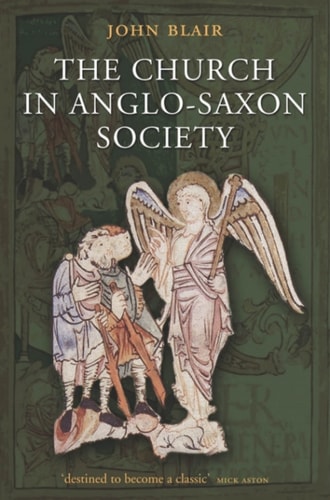
The Church in Anglo-Saxon Society
0
0
As an Amazon Associate and affiliate partner, Menrva Books earns from qualifying purchases. Learn more
Author Description
From the impact of the first monasteries in the seventh century, to the emergence of the local parochial system five hundred years later, the Church was a force for change in Anglo-Saxon society. It shaped culture and ideas, social and economic behaviour, and the organization of landscape and settlement. This book traces how the widespread foundation of monastic sites ('minsters') during c.670-730 gave the recently pagan English new ways of living, of exploiting their resources, and of absorbing European culture, as well as opening new spiritual and intellectual horizons. Through the era of Viking wars, and the tenth-century reconstruction of political and economic life, the minsters gradually lost their wealth, their independence, and their role as sites of high culture, but grew in stature as foci of local society and eventually towns. After 950, with the increasing prominence of manors, manor-houses, and village communities, a new and much larger category of small churches were founded, endowed, and rebuilt: the parish churches of the emergent eleventh- and twelfth-century local parochial system. In this innovative study, John Blair brings together written, topographical, and archaeological evidence to build a multi-dimensional picture of what local churches and local communities meant to each other in early England.
Menrva's Summary
THE THESIS
This book investigates how the Church functioned as a primary catalyst for social, economic, and cultural transformation in Anglo-Saxon England between the seventh and twelfth centuries. John Blair, a distinguished historian and archaeologist, synthesizes diverse evidence to argue that the evolution of the Church—from early monastic 'minsters' to the later parochial system—was inextricably linked to the development of English landscape, settlement patterns, and community identity. By examining the interplay between spiritual institutions and local life, Blair provides a framework for understanding the structural shifts in early English society.
THE SCOPE MAP
What You Will Find
- Analysis of the monastic 'minster' system during the period c.670-730.
- Examination of the transition from monastic dominance to the emergence of the local parish system after 950.
- Integration of written records, topographical surveys, and archaeological site data.
- Discussion of the impact of Viking incursions on ecclesiastical wealth and cultural influence.
Scope Limits
- The study focuses primarily on the development of local church structures rather than high-level ecclesiastical politics or theology.
- The analysis is geographically confined to Anglo-Saxon England.
THE AUTHORITY PERSPECTIVE
Scholars and historians frequently cite this work as a foundational text for understanding the intersection of landscape archaeology and social history in the early medieval period. Readers often note the academic density of the prose, which rewards those seeking a rigorous, evidence-based account of how religious institutions shaped the English countryside.
Page Count:
624
Publication Date:
2005-01-01
Publisher:
OUP Oxford
ISBN-10:
0191518832
ISBN-13:
9780191518836
History
Social History
European History
Archaeology
Religious History
Community Tags
Similar Books