Author Description
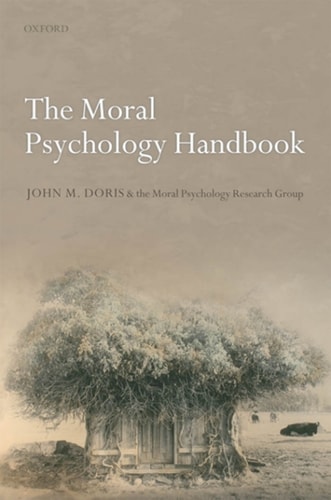
Moral psychology is the study of how human minds make and are made by human morality. This state-of-the-art volume covers contemporary philosophical and psychological work on moral psychology, as well as notable historical theories and figures in the field of moral psychology, such as Aristotle, Kant, Nietzsche, and the Buddha. The Oxford Handbook of Moral Psychology's fifty chapters, authored by leading figures in the field, cover foundational topics, such as character, virtue, emotion, moral responsibility, the neuroscience of morality, weakness of will, and the nature of moral judgments and reasons. The volume also canvases emerging work in applied moral psychology, including adaptive preferences, animals, mental illness, poverty, marriage, race, bias, and victim blaming. Collectively, the essays form the definitive survey of contemporary moral psychology.
Menrva's Summary
THE THESIS
This volume investigates the intersection of human cognition and moral frameworks to define how minds construct and are influenced by ethical systems. Edited by Manuel Vargas and John M. Doris, the text compiles contributions from prominent scholars to synthesize contemporary research with historical philosophical inquiry. It provides a comprehensive framework for understanding the mechanisms behind moral judgment, responsibility, and character development.
THE SCOPE MAP
What You Will Find
- Fifty chapters covering foundational topics including virtue, emotion, and the neuroscience of morality
- Analysis of historical theories from figures such as Aristotle, Kant, Nietzsche, and the Buddha
- Examination of applied moral psychology in areas like poverty, race, bias, and victim blaming
Scope Limits
- The text focuses primarily on academic and theoretical discourse rather than practical self-help applications
- It does not provide a singular unified theory of morality but rather a survey of diverse, often competing, perspectives
THE AUTHORITY PERSPECTIVE
Experts and academics recognize this volume as a foundational reference for the field of moral psychology. Readers frequently note the academic density of the prose, which is intended for researchers, graduate students, and scholars seeking a rigorous overview of the discipline.
Page Count:
1112
Publication Date:
2022-01-01
Publisher:
OUP Oxford
ISBN-10:
019264551X
ISBN-13:
9780192645517
Psychology
Philosophy
Ethics
Community Tags
Similar Books