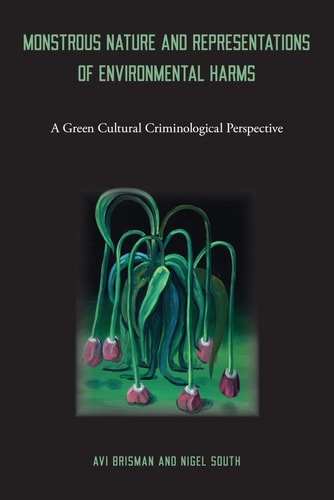
Monstrous Nature and Representations of Environmental Harms: A Green Cultural Criminological Perspective
0
0
As an Amazon Associate and affiliate partner, Menrva Books earns from qualifying purchases. Learn more
Author Description
How does culture influence human relationships with the environment? In Monstrous Nature and Representations of Environmental Harms, green cultural criminologists Avi Brisman and Nigel South examine stories of monsters and disasters to address how the ways we depict and think about harms to the environment dissuade us from taking care of our planet and each other. The authors use examples from popular culture, including Disney and Marvel Cinematic Universe films, to consider ideas about how the environment responds to people who cause it harm. Brisman and South identify and discuss three dominant and interrelated depictions of the relationship between humans and the environment: first, nature as monstrous or fear inducing; second, nature and the Earth (or parts of it) as abject; and third, the entanglement of nature and the apocalypse, wherein nature is contributing to the end of the world, with an end point sometimes conceptualized as one without humans. Monstrous Nature and Representations of Environmental Harms argues that such representations have material consequences. The authors make the case for challenging them so that we neither perpetuate them nor retreat into cynicism and defeatism about the future of our planet.
Menrva's Summary
THE THESIS
This book investigates how cultural narratives surrounding monsters and disasters shape our understanding and treatment of environmental harms. Avi Brisman and Nigel South, drawing on green cultural criminology, analyze popular culture examples, including Disney and Marvel films, to explore how depictions of nature influence human behavior towards the planet. They identify three key representations: nature as monstrous, nature as abject, and the entanglement of nature with apocalyptic scenarios. The authors contend that these cultural portrayals have tangible consequences, advocating for a critical re-evaluation to counter cynicism and promote environmental stewardship.
THE SCOPE MAP
- Analysis of popular culture representations of environmental harms, including Disney and Marvel Cinematic Universe films.
- Examination of three dominant depictions: nature as monstrous, nature as abject, and nature in apocalyptic narratives.
- Exploration of the influence of cultural narratives on human relationships with the environment.
- Application of green cultural criminological perspectives to understand environmental degradation.
- Argument for the material consequences of cultural representations of environmental issues.
- Call to challenge harmful narratives and avoid defeatism regarding the planet's future.
THE AUTHORITY PERSPECTIVE
The book offers a novel approach by applying cultural criminological frameworks to environmental issues, suggesting that how we tell stories about nature and its destruction has real-world impacts. The authors' use of contemporary popular culture examples aims to make complex theoretical concepts accessible. The work posits that challenging these dominant narratives is crucial for fostering a more proactive and less cynical approach to environmental protection. It encourages readers to consider the power of representation in shaping attitudes and actions towards the planet.
Page Count:
278
Publication Date:
2025-05-30
Publisher:
Temple University Press
ISBN-10:
1439923000
ISBN-13:
9781439923009
Science
Philosophy
Non-Fiction
Ecology
Media Studies
Criminology
Community Tags
Similar Books