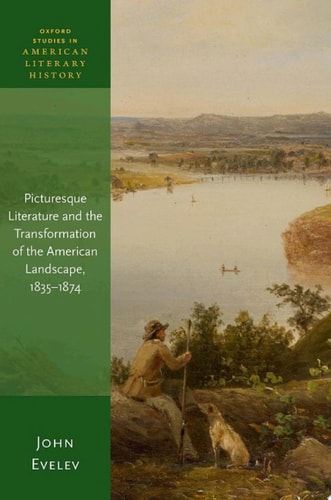
Picturesque Literature and the Transformation of the American Landscape, 1835-1874
0
0
As an Amazon Associate and affiliate partner, Menrva Books earns from qualifying purchases. Learn more
Author Description
Picturesque Literature and the Transformation of the American Landcape, 1835-1874 recovers the central role that the picturesque, a popular mode of scenery appreciation that advocated for an improved and manipulated natural landscape, played in the social, spatial, and literary history of mid-nineteenth century America. It argues that the picturesque was not simply a landscape aesthetic, but also a discipline of seeing and imaginatively shaping the natural that was widely embraced by bourgeois Americans to transform the national landscape in their own image. Through the picturesque, mid-century bourgeois Americans remade rural spaces into tourist scenery, celebrated the city streets as spaces of cultural diversity, created new urban public parks, and made suburban domesticity a national ideal. This picturesque transformation was promoted in a variety of popular literary genres, all focused on landscape description and all of which trained readers into the protocols of picturesque visual discipline as social reform. Many of these genres have since been dubbed "minor" or have been forgotten by our literary history, but the ranks of the writers of this picturesque literature include everyone from the most canonical (Hawthorne, Melville, Thoreau, Emerson, and Poe), to major authors of the period now less familiar (such as Henry Wadsworth Longfellow, Lydia Maria Child, Nathaniel Parker Willis, and Margaret Fuller), to those now completely forgotten. Individual chapters of the book link picturesque literary genres to the spaces that the genres helped to transform and, in the process, create what is recognizably our modern American landscape.
Menrva's Summary
THE THESIS
This book investigates how the picturesque aesthetic functioned as a social and spatial discipline that allowed mid-nineteenth-century Americans to manipulate and redefine the national landscape. John Evelev, a scholar of American literary history, utilizes a wide array of primary source texts—ranging from canonical literature to forgotten popular genres—to demonstrate that the picturesque was a deliberate tool for bourgeois social reform. He argues that this visual discipline was instrumental in the creation of modern American spaces, including public parks, suburban environments, and tourist destinations.
THE SCOPE MAP
What You Will Find
- Analysis of the intersection between literary description and physical landscape transformation.
- Examination of diverse genres including travel writing, urban sketches, and domestic literature.
- Discussion of authors ranging from Hawthorne and Melville to lesser-known figures like Nathaniel Parker Willis.
Scope Limits
- The study is strictly confined to the period between 1835 and 1874.
- The analysis focuses primarily on the bourgeois perspective and its influence on spatial development.
THE AUTHORITY PERSPECTIVE
Scholars recognize this work as a significant contribution to the study of American literary history and its relationship to environmental and spatial politics. The text is noted for its ability to bridge the gap between aesthetic theory and the physical development of the American landscape.
Page Count:
274
Publication Date:
2021-01-01
Publisher:
OUP Oxford
ISBN-10:
0192647326
ISBN-13:
9780192647320
American History
Environmental History
Landscape architecture
English
English & College Success
19th Century
Literary Criticism