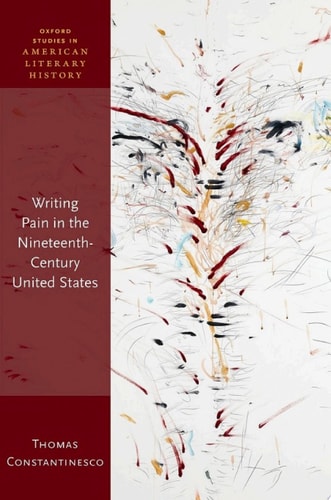
Writing Pain in the Nineteenth-Century United States
0
0
As an Amazon Associate and affiliate partner, Menrva Books earns from qualifying purchases. Learn more
Author Description
Writing Pain in the Nineteenth-Century United States examines how pain is represented in a range of literary texts and genres from the nineteenth-century US. It considers the aesthetic, philosophical, and ethical implications of pain across the works of Ralph Waldo Emerson, Harriet Jacobs, Emily Dickinson, Henry James, Elizabeth Stuart Phelps, and Alice James, as the national culture of pain progressively transformed in the wake of the invention of anesthesia. Through examining the work of nineteenth-century writers, Constantinesco argues that pain, while undeniably destructive, also generates language and identities, and demonstrates how literature participates in theorizing the problems of mind and body that undergird the deep chasms of selfhood, sociality, gender, and race of a formative period in American history. Writing Pain in the Nineteenth-Century United States considers first Emerson's philosophy of compensation, which promises to convert pain into gain. It also explores the limitations of this model, showing how Jacobs contests the division of body and mind that underwrites it and how Dickinson challenges its alleged universalism by foregrounding the unshareability of pain as a paradoxical measure of togetherness. It then investigates the concurrent economies of affects in which pain was implicated during and after the Civil War and argues, through the example of James and Phelps, for queer sociality as a response to the heteronormative violence of sentimentalism. The last chapter on Alice James extends the critique of sentimental sympathy while returning to the book's premise that pain is generative and the site of thought. By linking literary formalism with individual and social formation, Writing Pain in the Nineteenth-Century United States eventually claims close reading as a method to recover the theoretical work of literature.
Menrva's Summary
THE THESIS
How does the representation of physical and psychological pain in nineteenth-century American literature shape the construction of individual identity and social relations? Thomas Constantinesco, a scholar of American literature, utilizes a framework of literary formalism and historical analysis to examine how authors navigated the shift in cultural perceptions of pain following the introduction of anesthesia. He argues that literature serves as a critical site for theorizing the mind-body connection, suggesting that pain acts as a generative force that informs concepts of selfhood, gender, and race.
THE SCOPE MAP
What You Will Find
- Analysis of literary works by Emerson, Jacobs, Dickinson, James, and Phelps.
- Examination of the cultural impact of anesthesia on nineteenth-century American thought.
- Exploration of the intersection between sentimentalism, queer sociality, and the Civil War era.
- Theoretical application of close reading to recover the philosophical contributions of literary texts.
Scope Limits
- The study focuses primarily on specific canonical and non-canonical American authors rather than a comprehensive survey of all nineteenth-century literature.
- The analysis does not prioritize medical history over the aesthetic and philosophical implications of pain.
THE AUTHORITY PERSPECTIVE
Scholars in the field of American literary history categorize this work as a rigorous contribution to the study of affect and embodiment. Readers frequently note the academic density of the prose and the author's precise application of close reading techniques to complex philosophical themes.
Page Count:
276
Publication Date:
2022-01-01
Publisher:
OUP Oxford
ISBN-10:
0192668129
ISBN-13:
9780192668127
Philosophy
Academic
19th Century
Anthologies
English
Literary Criticism
American History
New Used & Rental Textbooks
English & College Success
Community Tags
Other Editions(2)

Similar Books


Reader Comments
Share Your Thoughts
No comments yet. Be the first to share your thoughts!