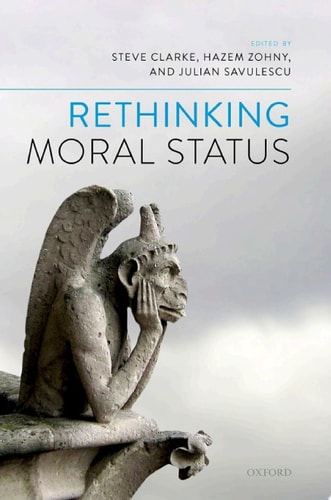
Rethinking Moral Status
0
0
As an Amazon Associate and affiliate partner, Menrva Books earns from qualifying purchases. Learn more
Author Description
Common-sense morality implicitly assumes that reasonably clear distinctions can be drawn between the "full" moral status that is usually attributed to ordinary adult humans, the partial moral status attributed to non-human animals, and the absence of moral status, which is usually ascribed to machines and other artifacts. These implicit assumptions have long been challenged, and are now coming under further scrutiny as there are beings we have recently become able to create, as well as beings that we may soon be able to create, which blur the distinctions between human, non-human animal, and non-biological beings. These beings include non-human chimeras, cyborgs, human brain organoids, post-humans, and human minds that have been uploaded into computers and onto the internet and artificial intelligence. It is far from clear what moral status we should attribute to any of these beings. There are a number of ways we could respond to the new challenges these technological developments raise: we might revise our ordinary assumptions about what is needed for a being to possess full moral status, or reject the assumption that there is a sharp distinction between full and partial moral status. This volume explores such responses, and provides a forum for philosophical reflection about ordinary presuppositions and intuitions about moral status.
Menrva's Summary
THE THESIS
This volume investigates the adequacy of traditional moral status frameworks in the face of emerging technological entities that challenge human-centric definitions. The author compiles a series of philosophical inquiries into how society should categorize the moral standing of entities that exist between conventional definitions of human, animal, and machine. By examining the boundaries of consciousness and biological identity, the text argues for a re-evaluation of the criteria required for moral consideration in an era of rapid scientific advancement.
THE SCOPE MAP
What You Will Find
- Philosophical analysis of moral status regarding chimeras, cyborgs, and brain organoids.
- Theoretical frameworks for evaluating the moral standing of uploaded human minds.
- Critical examination of the binary distinction between full and partial moral status.
Scope Limits
- The text does not provide a definitive legal or policy-based roadmap for the regulation of these technologies.
- It does not focus on the technical engineering specifications of the entities discussed.
THE AUTHORITY PERSPECTIVE
Scholars and ethicists regard this collection as a rigorous contribution to the discourse on emerging bioethical challenges. Readers frequently note the academic density of the prose, which is intended for those already familiar with foundational moral philosophy.
Page Count:
350
Publication Date:
2021-01-01
Publisher:
OUP Oxford
ISBN-10:
0192646419
ISBN-13:
9780192646415
Philosophy
Ethics
Moral Philosophy
Bioethics
Technology
Community Tags
Similar Books