Rethinking Moral Status
0
0
As an Amazon Associate and affiliate partner, Menrva Books earns from qualifying purchases. Learn more
Author Description
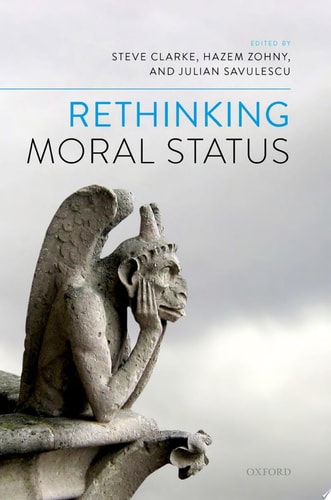
Common-sense morality implicitly assumes that reasonably clear distinctions can be drawn between the "full" moral status that is usually attributed to ordinary adult humans, the partial moral status attributed to non-human animals, and the absence of moral status, which is usually ascribed to machines and other artifacts. These implicit assumptions have long been challenged, and are now coming under further scrutiny as there are beings we have recently become able to create, as well as beings that we may soon be able to create, which blur the distinctions between human, non-human animal, and non-biological beings. These beings include non-human chimeras, cyborgs, human brain organoids, post-humans, and human minds that have been uploaded into computers and onto the internet and artificial intelligence. It is far from clear what moral status we should attribute to any of these beings.There are a number of ways we could respond to the new challenges these technological developments raise: we might revise our ordinary assumptions about what is needed for a being to possess full moral status, or reject the assumption that there is a sharp distinction between full and partial moral status. This volume explores such responses, and provides a forum for philosophical reflection about ordinary presuppositions and intuitions about moral status.
Menrva's Summary
THE THESIS
This volume investigates the ethical criteria for moral status in light of emerging technologies that challenge traditional distinctions between humans, animals, and machines. The authors, including prominent bioethicists Julian Savulescu and Steve Clarke, examine how advancements such as brain organoids, chimeras, and artificial intelligence necessitate a re-evaluation of our moral frameworks. They argue that existing common-sense assumptions regarding who or what possesses moral standing are increasingly inadequate for navigating the complexities of post-human and non-biological entities.
THE SCOPE MAP
What You Will Find
- Philosophical analysis of moral status criteria
- Examination of non-human chimeras, cyborgs, and brain organoids
- Discussion on the moral implications of mind uploading and artificial intelligence
- Theoretical frameworks for revising traditional moral hierarchies
Scope Limits
- Does not provide definitive legal or policy guidelines for specific technologies
- Does not focus on the technical engineering aspects of the mentioned entities
THE AUTHORITY PERSPECTIVE
Experts in bioethics and philosophy recognize this work as a significant contribution to the ongoing discourse surrounding emerging technologies and moral agency. Readers frequently note the academic density of the prose, which is intended for scholars and students engaged in advanced ethical inquiry.
Page Count:
352
Publication Date:
2021-10-25
Publisher:
Oxford University Press
ISBN-10:
0192894072
ISBN-13:
9780192894076
Philosophy
Bioethics
Ethics
Technology
Transhumanism
Moral Philosophy
Community Tags
Similar Books