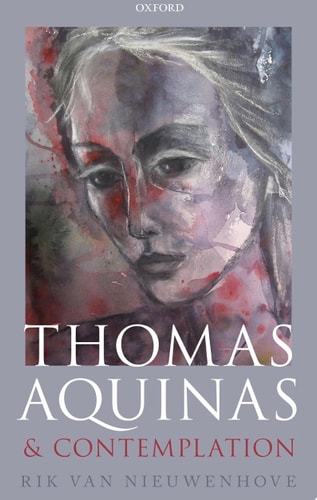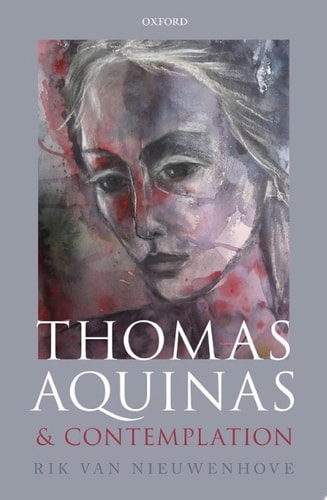
Thomas Aquinas and Contemplation
0
0
As an Amazon Associate and affiliate partner, Menrva Books earns from qualifying purchases. Learn more
Author Description
Contemplation, according to Thomas Aquinas, is the central goal of our life; yet a scholarly study on this topic has not appeared for over seventy years. This book fills that obvious gap. From an interdisciplinary perspective this study considers the epistemological and metaphysical foundations of the contemplative act; the nature of the active and contemplative lives in light of Aquinas's Dominican calling; the role of faith, charity, and the gifts of the Holy Spirit in contemplation; and contemplation and the beatific vision. Key questions addressed are: What is contemplation? What is truth? How can we know God? How do faith and reason relate to one another? How does Aquinas envisage the relations between theology and philosophy? What role does charity play in contemplation? Throughout this book the author argues that Aquinas espouses a profoundly intellective notion of contemplation in the strictly speculative sense, which culminates in a non-discursive moment of insight (intuitus simplex). In marked contrast to his contemporaries Aquinas therefore rejects a sapiential or affective brand of theology. He also employs a broader notion of contemplation, which can be enjoyed by all Christians, in which the gifts of the Holy Spirit are of central importance. This book should appeal to all those who are interested in this key aspect of Aquinas's thought. It provides a lucid account of central aspects of Aquinas's metaphysics, epistemology, theology, and spirituality. It also offers new insights into the nature of the theological discipline as Aquinas sees it, and how theology relates to philosophy
Menrva's Summary
THE THESIS
This study investigates the epistemological and metaphysical foundations of contemplation within the theological framework of Thomas Aquinas. Rik Van Nieuwenhove, a scholar of medieval theology, examines how Aquinas distinguishes between speculative intellective contemplation and the broader, grace-filled contemplation accessible to all believers. By analyzing Aquinas's Dominican context and his rejection of purely affective theology, the author argues that Aquinas maintains a rigorous, non-discursive model of insight known as intuitus simplex.
THE SCOPE MAP
What You Will Find
- Analysis of the relationship between the active and contemplative lives in Dominican thought
- Examination of the role of faith, charity, and the gifts of the Holy Spirit
- Investigation into the connection between contemplation and the beatific vision
- Discussion on the distinction between theology and philosophy in the Thomistic tradition
Scope Limits
- The text does not provide a general biography of Aquinas
- It does not cover the entirety of Aquinas's political or ethical writings outside the context of contemplation
THE AUTHORITY PERSPECTIVE
Scholars and students of medieval philosophy frequently cite this work for its clear articulation of the complexities within Thomistic epistemology. Experts highlight the text as a significant contribution to understanding the intersection of speculative theology and Christian spirituality.
Page Count:
230
Publication Date:
2021-01-01
Publisher:
OUP Oxford
ISBN-10:
0192648454
ISBN-13:
9780192648457
Religion
Philosophy
Epistemology
Metaphysics
Christian spirituality
Theology Practical
Theology