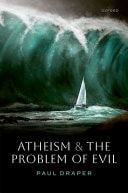
Atheism and the Problem of Evil
0
0
As an Amazon Associate and affiliate partner, Menrva Books earns from qualifying purchases. Learn more
Author Description
This Book Defends Two Arguments From Evil Against Core Theism. Core Theism Is The Thesis That An Omnipotent, Omniscient, And Loving Agent Created The Cosmos. Core Atheism Is The Denial Of That Thesis. Each Argument Involves Comparing Core Theism To An Alternative Hypothesis And Showing That The Alternative Is Much More Probable Than Core Theism, Either Because It Fits The Relevant Data Much Better Than Theism Despite Being No Less Probable Intrinsically Than Theism, Or Because It Fits The Relevant Data At Least As Well As Theism Despite Being Much More Probable Intrinsically Than Theism. Since These Arguments Conclude That Core Atheism Is Very Probable All Things Considered, Alleged Evidence For Core Theism Cannot Be Ignored, Including Ontological Arguments, Cosmological Arguments, Fine-tuning Arguments, And Arguments Based On Religious Experience. Accordingly, The Book Includes Critiques Of The Most Important Arguments For God's Existence Offered By Natural Theologians. It Also Includes A Chapter Criticizing Skeptical Theism, Which Challenges Our Ability To Judge How Well Core Theism Fits The Relevant Data
Menrva's Summary
THE THESIS
This book investigates whether the existence of evil in the world renders the hypothesis of core theism significantly less probable than the hypothesis of core atheism. Paul Draper, a prominent philosopher of religion, utilizes a comparative probabilistic framework to evaluate the explanatory power of theism against competing naturalistic hypotheses. He argues that when the data of evil is weighed against the intrinsic probability of these competing models, the case for atheism becomes robust, necessitating a rigorous re-evaluation of traditional arguments for the existence of a deity.
THE SCOPE MAP
What You Will Find
- A comparative analysis of core theism versus core atheism using probabilistic reasoning.
- A systematic critique of major arguments for God's existence, including ontological, cosmological, and fine-tuning arguments.
- A dedicated chapter evaluating and challenging the framework of skeptical theism.
Scope Limits
- The text does not provide an exhaustive history of the problem of evil in literature or theology.
- It focuses primarily on analytic philosophical arguments rather than sociological or psychological perspectives on religious belief.
THE AUTHORITY PERSPECTIVE
Experts in the philosophy of religion recognize this work as a significant contribution to the probabilistic argument from evil. Readers frequently note the high level of academic density and the rigorous logical structure required to engage with the author's complex arguments.
Page Count:
192
Publication Date:
2025-11-28
Publisher:
Oxford University Press
ISBN-10:
0192847163
ISBN-13:
9780192847164
Religion
Philosophy
Politics
Theology
Atheism
Metaphysics
Epistemology
Community Tags
Similar Books