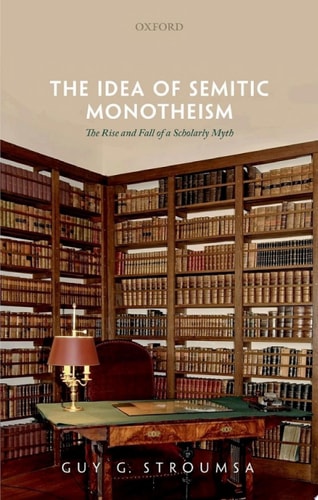
The Idea of Semitic Monotheism: The Rise and Fall of a Scholarly Myth
0
0
As an Amazon Associate and affiliate partner, Menrva Books earns from qualifying purchases. Learn more
Author Description
The Idea of Semitic Monotheism examines some major aspects of the scholarly study of religion in the long nineteenth century--from the Enlightenment to the First World War. It aims to understand the new status of Judaism and Islam in the formative period of the new discipline. Guy G. Stroumsa focuses on the concept of Semitic monotheism, a concept developed by Ernest Renan around the mid-nineteenth century on the basis of the postulated and highly problematic contradistinction between Aryan and Semitic families of peoples, cultures, and religions. This contradistinction grew from the Western discovery of Sanskrit and its relationship with European languages, at the time of the Enlightenment and Romanticism. Together with the rise of scholarly Orientalism, this discovery offered new perspectives on the East, as a consequence of which the Near East was demoted from its traditional status as the locus of the Biblical revelations. This innovative work studies a central issue in the modern study of religion. Doing so, however, it emphasizes the new dualistic taxonomy of religions had major consequences and sheds new light on the roots of European attitudes to Jews and Muslims in the twentieth century, up to the present day.
Menrva's Summary
THE THESIS
This work investigates the origins and eventual collapse of the scholarly construct of 'Semitic monotheism' within the context of nineteenth-century religious studies. Guy G. Stroumsa, a scholar of comparative religion, examines how Enlightenment and Romantic-era intellectual shifts—specifically the discovery of Sanskrit and the subsequent Aryan-Semitic dichotomy—reshaped Western perceptions of Judaism and Islam. By analyzing the work of figures like Ernest Renan, the author demonstrates how this taxonomy demoted the Near East from its position as the center of Biblical revelation and influenced European attitudes toward religious minorities throughout the twentieth century.
THE SCOPE MAP
What You Will Find
- Analysis of the nineteenth-century intellectual transition from Enlightenment to the First World War
- Examination of the 'Aryan versus Semitic' racial and linguistic classification systems
- Critique of early scholarly Orientalism and its impact on the study of religion
- Historical context regarding the shifting status of Judaism and Islam in Western academia
Scope Limits
- The text does not provide a comprehensive history of monotheism itself, focusing instead on the academic myth of the concept
- It does not cover post-twentieth-century theological developments outside the scope of the identified scholarly myth
THE AUTHORITY PERSPECTIVE
Scholars recognize this text as a rigorous critique of the intellectual frameworks that defined early comparative religion. Readers frequently note the academic density of the prose, which is intended for those familiar with the history of Orientalism and religious studies.
Page Count:
311
Publication Date:
2021-01-01
Publisher:
OUP Oxford
ISBN-10:
0192653865
ISBN-13:
9780192653864
History
Religion
Philosophy
Monotheism
Orientalism
Intellectual History
Sociology
Religion
Community Tags
Similar Books