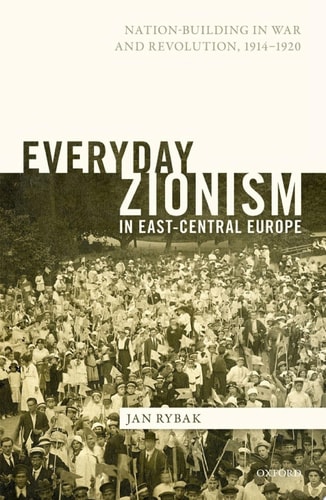
Everyday Zionism in East-Central Europe: Nation-Building in War and Revolution, 1914-1920
0
0
As an Amazon Associate and affiliate partner, Menrva Books earns from qualifying purchases. Learn more
Author Description
Everyday Zionism examines Zionist activism in East-Central Europe during the years of war, occupation, revolution, the collapse of empires, and the formation of nation states in the years 1914 to 1920. Against the backdrop of the Great War—its brutal aftermath and consequent violence—the day-to-day encounters between Zionist activists and the Jewish communities in the region gave the movement credibility, allowed it to win support and to establish itself as a leading force in Jewish political and social life for decades to come. Through activists' efforts, Zionism came to mean something new: Rather than being concerned with debates over Jewish nationhood and pioneering efforts in Palestine, it came to be about aiding starving populations, organizing soup-kitchens, establishing orphanages, schools, kindergartens, and hospitals, negotiating with the authorities, and leading self-defence against pogroms. Through this engagement Zionism evolved into a mass movement that attracted and inspired tens of thousands of Jews throughout the region. Everyday Zionism approaches the major European events of the period from the dual perspectives of Jewish communities and the Zionist activists on the ground, demonstrating how war, revolution, empire, and nation held very different meanings for people, depending on their local circumstances. Based on extensive archival research, the study shows how during the war and its aftermath East-Central Europe saw a large-scale nation-building project by Zionist activists who fought for and led their communities to shape for them a national future.
Menrva's Summary
THE THESIS
This study investigates how Zionist activism transformed from an ideological movement into a practical, mass-mobilization force within East-Central Europe during the collapse of empires between 1914 and 1920. Author Jan Rybak, a scholar of modern Jewish history, utilizes extensive archival research to argue that Zionism gained legitimacy not through abstract political debate, but through the provision of essential social services and community defense during the chaos of the Great War and its aftermath. The work posits that this period of crisis allowed Zionist organizations to embed themselves into the daily lives of Jewish populations, effectively shaping the national identity of the region.
THE SCOPE MAP
What You Will Find
- Analysis of Zionist social welfare initiatives including soup kitchens, orphanages, and schools.
- Examination of political negotiations between Jewish activists and local authorities during the formation of new nation-states.
- Documentation of self-defense efforts against pogroms in the post-war period.
- Comparative perspectives on how war and revolution affected different local Jewish communities.
Scope Limits
- The study focuses specifically on the years 1914 to 1920 and does not provide an exhaustive history of Zionism in the later twentieth century.
- The research is geographically constrained to East-Central Europe and excludes developments in Western Europe or the Americas.
THE AUTHORITY PERSPECTIVE
Historians and scholars of Jewish studies recognize this work as a significant contribution to understanding the grassroots evolution of political movements during periods of state collapse. Readers frequently note the academic density of the prose and the depth of the archival evidence provided to support the author's claims regarding the practical application of nationalist ideology.
Page Count:
373
Publication Date:
2021-01-01
Publisher:
OUP Oxford
ISBN-10:
0192651846
ISBN-13:
9780192651846
History
European History
Zionism
Asia history
Politics & Government
Jewish Studies
Nation-building
Community Tags
Similar Books