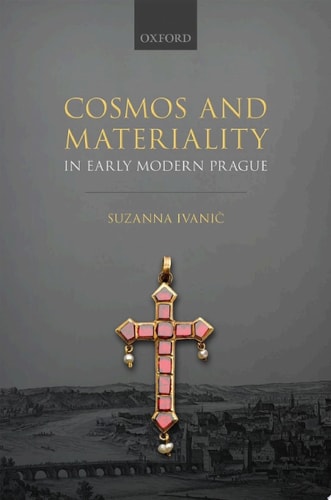
Cosmos and Materiality in Early Modern Prague
0
0
As an Amazon Associate and affiliate partner, Menrva Books earns from qualifying purchases. Learn more
Author Description
Prague in the seventeenth century is known as home to a scintillating imperial court crammed with exotic goods, scientists, and artisans, receiving ambassadors from Persia, and also as a city suffering plagues, riots, and devastating military attacks. But Prague was also the setting for a complex and shifting spiritual world. At the beginning of the century it was a multiconfessional city, but by 1700 it represented one of the most archetypical Catholic cities in Europe. Through a material approach, Cosmos and Materiality pieces together how early modern men and women experienced this transformation on a daily basis. Cosmos and Materiality in Early Modern Prague presents a bold alternative understanding of the history of early modern religion in Central Europe. The history of religion in the early modern period has overwhelmingly been analysed through a confessional lens, but this book shows how Prague's spiritual worlds were embedded in their natural environment and social relations as much if not more than in confessional identity in the seventeenth century. While texts in this period trace emerging discourses around notions of religion, superstition, magic, and what it was to be Catholic or Protestant, a material approach avoids these category mistakes being applied to everyday practice. It is through a rich seam of material evidence in Prague - spoons, glass beakers, and amulets as much as traditional devotional objects like rosaries and garnet encrusted crucifixes - that everyday beliefs, practices, and identities can be recovered.
Menrva's Summary
THE THESIS
This book investigates how the spiritual lives of seventeenth-century Prague residents were shaped by their material environment and social interactions rather than solely by confessional identity. Suzanna Ivanič, a historian specializing in early modern Central Europe, challenges traditional historiography that relies heavily on theological texts. By utilizing a material culture framework, she argues that everyday objects provide a more accurate reflection of lived religious experience than formal ecclesiastical records.
THE SCOPE MAP
What You Will Find
- Analysis of seventeenth-century Prague during its transition from a multiconfessional city to a Catholic center.
- Examination of domestic and devotional objects including spoons, glass beakers, amulets, and crucifixes.
- Methodology focusing on the intersection of natural environment, social relations, and spiritual practice.
Scope Limits
- The study does not focus on high-level political or diplomatic history of the imperial court.
- The research does not prioritize traditional theological discourse or formal church doctrine.
THE AUTHORITY PERSPECTIVE
Scholars in the field of early modern history recognize this work as a significant shift toward material-focused religious studies. Readers frequently note the academic density of the prose and the author's meticulous attention to the physical artifacts of daily life.
Page Count:
256
Publication Date:
2021-01-01
Publisher:
OUP Oxford
ISBN-10:
0192654381
ISBN-13:
9780192654380
History
Cultural History
Religious History
Prague
History of the Americas
Early Modern