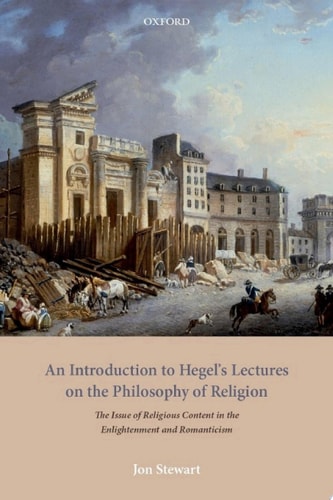
An Introduction to Hegel's Lectures on the Philosophy of Religion: The Issue of Religious Content in the Enlightenment and Romanticism
0
0
As an Amazon Associate and affiliate partner, Menrva Books earns from qualifying purchases. Learn more
Author Description
An Introduction to Hegel's Lectures on the Philosophy of Religion examines Hegel's religious thinking by seeing it against the backdrop of the main religious trends in his own day, specifically the Enlightenment and Romanticism. A basic introduction to Hegel's lectures, it provides an account of the criticism of religion by key Enlightenment thinkers such as Voltaire, Lessing, Hume, and Kant. This is followed by an analysis of how the Romantic thinkers, such as Rousseau, Jacobi and Schleiermacher, responded to these challenges. For Hegel, the views of these thinkers from both the Enlightenment and Romanticism tended to empty religion of its content. The goal that he sets for his own philosophy of religion is to restore this lost content. The book provides a detailed account of Hegel's Lectures on the Philosophy of Religion and argues that the basic ideas of the Enlightenment and Romanticism are still present today, and remain an important issue for both academics and non-academics, regardless of their religious orientation.
Menrva's Summary
THE THESIS
This book investigates how G.W.F. Hegel’s philosophy of religion serves as a corrective to the perceived emptying of religious content by Enlightenment and Romantic thinkers. Jon Stewart, a scholar specializing in 19th-century philosophy, utilizes historical context and textual analysis to demonstrate how Hegel’s lectures address the intellectual challenges posed by predecessors like Kant, Voltaire, and Schleiermacher. The author argues that Hegel’s project is not merely historical but remains relevant to contemporary debates regarding the nature and validity of religious belief.
THE SCOPE MAP
What You Will Find
- Historical analysis of Enlightenment critiques of religion by Voltaire, Lessing, Hume, and Kant.
- Examination of the Romantic reaction to Enlightenment rationalism through figures like Rousseau, Jacobi, and Schleiermacher.
- A structured overview of Hegel's Lectures on the Philosophy of Religion.
- Arguments concerning the persistence of these historical philosophical tensions in modern discourse.
Scope Limits
- The text does not provide an exhaustive biography of Hegel.
- It does not attempt to resolve modern theological debates, focusing instead on the philosophical framework of the lectures.
THE AUTHORITY PERSPECTIVE
Scholars and students of German Idealism frequently cite this work as a clear, accessible entry point into Hegel’s complex religious thought. Experts highlight the book’s utility in bridging the gap between historical context and the specific arguments presented in Hegel’s lectures.
Page Count:
291
Publication Date:
2021-01-01
Publisher:
OUP Oxford
ISBN-10:
0192654578
ISBN-13:
9780192654571
Philosophy
Religion
Romanticism
Enlightenment
Philosophy history
Community Tags
Similar Books