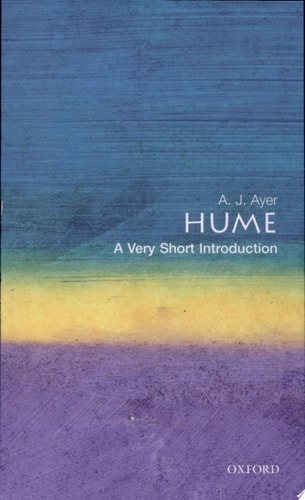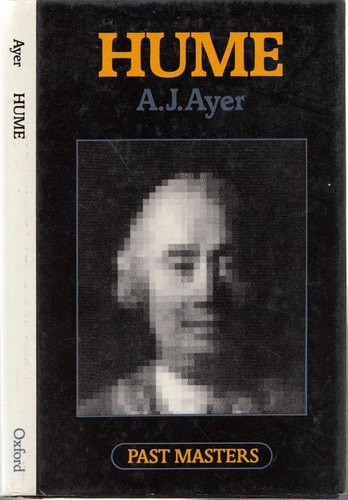
Hume
0
0
As an Amazon Associate and affiliate partner, Menrva Books earns from qualifying purchases. Learn more
Author Description
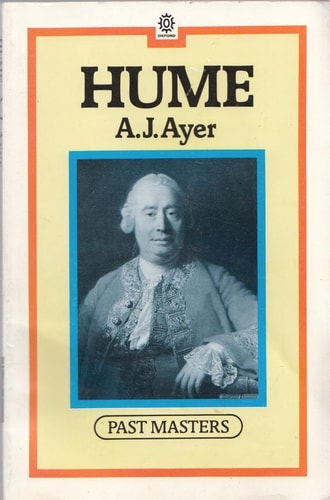
Hume is one of the greatest of all British philosophers, and even in his own lifetime was celebrated as one of the pivotal figures of the Enlightenment. A central theme of his philosophy is the conviction that questions traditionally thought of as completely independent of the scientific realm—questions about the mind, about morality, and about God, for example—are actually best explained using the experimental methods characteristic of the natural sciences. Hume's 'naturalist' approach to a wide variety of philosophical topics resulted in highly original theories about perception, self-identity, causation, morality, politics, and religion, all of which are discussed in this stimulating introduction by A J Ayer, himself one of the twentieth century's most important philosophers. Ayer also gives an account of Hume's fascinating life and character, and includes generous quotations from Hume's lucid and often witty writings.
Menrva's Summary
THE THESIS
This work investigates the core philosophical contributions of David Hume, specifically his attempt to apply the experimental methods of natural science to traditional metaphysical inquiries. A.J. Ayer, a prominent twentieth-century philosopher, utilizes his own analytical background to interpret Hume's naturalist framework. The text argues that Hume's rejection of abstract speculation in favor of empirical observation remains the defining characteristic of his intellectual legacy.
THE SCOPE MAP
What You Will Find
- Analysis of Hume's theories on perception, causation, and self-identity
- Examination of Hume's critiques regarding morality, politics, and religion
- Biographical overview of Hume's life and personal character
- Extensive primary source quotations from Hume's own writings
Scope Limits
- Does not provide an exhaustive critique of all secondary literature on Hume
- Does not attempt to reconcile Hume's philosophy with contemporary post-analytical developments
THE AUTHORITY PERSPECTIVE
Readers frequently note the clarity and accessibility of Ayer's prose, which distills complex Enlightenment thought into a manageable format. Experts highlight this as a foundational introductory text that benefits significantly from the author's own philosophical expertise.
Page Count:
102
Publication Date:
1980-01-01
Publisher:
Oxford University Press
ISBN-10:
0192875299
ISBN-13:
9780192875297
Philosophy
Biography
Non-Fiction
Philosophy history
Enlightenment
Community Tags
Similar Books