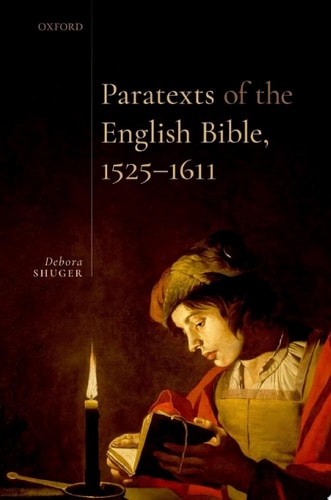
Paratexts of the English Bible, 1525-1611
0
0
As an Amazon Associate and affiliate partner, Menrva Books earns from qualifying purchases. Learn more
Author Description
English bibles, from Tyndale's 1525 New Testament to the 1611 King James, feature calendars, woodcuts, maps, chronologies, prayers, philological glosses, inset historical essays, elaborate multi-page diagrams, single-leaf summaries of scripture, prefaces by eminent churchmen, doctrinal notes by leading theologians, a dialogue on predestination, a twelfth-century genealogy of Christ, a ninth-century Jewish chronicle--most widely available, given the hundreds of editions printed between those dates. This book explores this archive, but it also tracks its changes, because while biblical translations remain relatively stable over time, the paratexts cocooning a bible's first printing sometimes mutate or vanish in succeeding editions--and indeed sometimes they migrate to a competing bible. These paratexts, together with their revelatory print histories, disclose a picture of the English Reformation that differs in striking ways from the authorized version.
Menrva's Summary
THE THESIS
This book investigates how the paratextual elements of early English Bibles—such as maps, woodcuts, and prefaces—function as a distinct archive that reveals a more complex and varied history of the English Reformation than the biblical translations themselves. Debora Shuger, a scholar of Renaissance literature and religion, utilizes a vast collection of printed editions from 1525 to 1611 to demonstrate that these supplementary materials were not static. She argues that the mutation, migration, and disappearance of these paratexts across various editions provide a unique lens through which to view the shifting theological and political landscape of the era.
THE SCOPE MAP
What You Will Find
- A comprehensive analysis of paratextual elements including calendars, woodcuts, maps, chronologies, and doctrinal notes.
- A comparative study of how these materials migrated between competing Bible editions.
- An examination of the print history of English Bibles from Tyndale to the King James Version.
Scope Limits
- The study is strictly limited to the English Bible print tradition between 1525 and 1611.
- The analysis focuses primarily on the paratexts rather than the theological nuances of the biblical translations themselves.
THE AUTHORITY PERSPECTIVE
Scholars and historians recognize this work as a significant contribution to the field of book history and Reformation studies. Readers frequently note the meticulous archival research and the author's ability to synthesize complex print histories into a coherent argument about religious culture.
Page Count:
361
Publication Date:
2022-01-01
Publisher:
OUP Oxford
ISBN-10:
0192655604
ISBN-13:
9780192655608
History
Religion
Bible
English Reformation
Book History
Indigenous
Literary Criticism
Community Tags
Similar Books