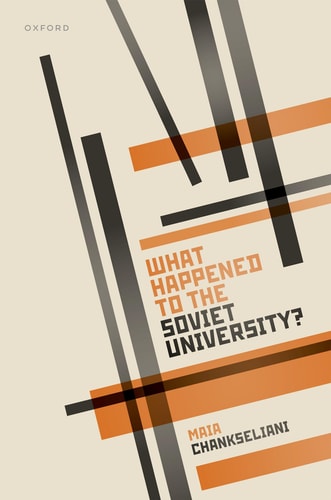
What Happened to the Soviet University?
0
0
As an Amazon Associate and affiliate partner, Menrva Books earns from qualifying purchases. Learn more
Author Description
What Happened to the Soviet University? explores how one of the largest geopolitical changes of the twentieth century—the dissolution of the Soviet Union— triggered and inspired the reconfiguration of the Soviet university. The reader is invited to engage in a historical and sociological analysis of radical and incremental changes affecting sixty-nine former Soviet universities since the early 1990s. The study departs from traditional deficit-oriented, internalist explanations of change and illustrates how global flows of ideas, people, and finances have impacted higher education transformations in this region. It also identifies areas of persistence. The processes of marketisation, internationalisation, and academic liberation are analysed to show that universities have maintained certain traditions while adopting and internalising new ways of fulfilling their education and research functions. Soviet universities have survived chaotic processes of post-Soviet transformation and have self-stabilised with time. Most of them remain flagship institutions with large numbers of students and relatively high research productivity. At the same time, the majority of these universities operate in a top-down, one-man management environment with limited institutional autonomy and academic freedom. As the homes of intellectuals, universities represent a duality of opportunity and threat. Universities can nurture collective possibilities, imagining and bringing about different futures. At the same time, or perhaps because of this, the probability is high that universities will continue to be perceived as threats to governments with authoritarian inclinations. One message to take away from this monograph is that the time is ripe for former Soviet universities to loosen their last remaining chains.
Menrva's Summary
THE THESIS
This monograph investigates how the dissolution of the Soviet Union catalyzed the structural and functional reconfiguration of higher education institutions across the post-Soviet landscape. Author Maia Chankseliani, a scholar specializing in international and comparative education, employs a sociological framework to move beyond internalist explanations of institutional change. By analyzing sixty-nine former Soviet universities, she argues that these institutions have navigated a complex tension between adopting global marketization trends and maintaining entrenched, top-down management traditions.
THE SCOPE MAP
What You Will Find
- Historical and sociological analysis of sixty-nine former Soviet universities since the early 1990s.
- Examination of global influences including internationalization, marketization, and academic liberation.
- Assessment of institutional persistence versus adaptation in post-Soviet governance.
Scope Limits
- The study focuses primarily on institutional structures and governance rather than individual student experiences or specific pedagogical outcomes.
- The analysis is bounded by the post-1990 transition period and does not provide an exhaustive history of the Soviet-era university system prior to the collapse.
THE AUTHORITY PERSPECTIVE
Experts identify this work as a significant contribution to the study of post-Soviet institutional transformation, noting its departure from deficit-oriented narratives. Scholars frequently highlight the text for its balanced approach to the duality of universities as both sites of intellectual potential and targets of authoritarian control.
Page Count:
512
Publication Date:
2022-01-01
Publisher:
OUP Oxford
ISBN-10:
0192666754
ISBN-13:
9780192666758
History
Soviet Studies
Special Topics
Higher Education
Sociology
Education