
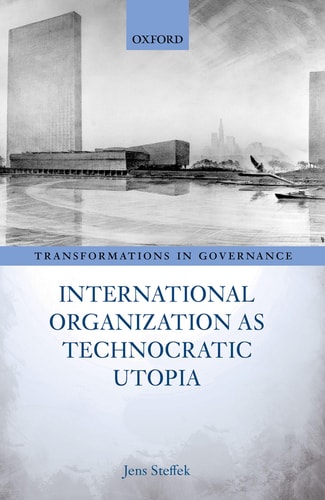
International Organization as Technocratic Utopia
0
0
As an Amazon Associate and affiliate partner, Menrva Books earns from qualifying purchases. Learn more
Author Description
This is an open access title available under the terms of a CC BY-NC-ND 4.0 International license. It is free to read at Oxford Scholarship Online and offered as a free PDF download from OUP and selected open access locations. As climate change and a pandemic pose enormous challenges to humankind, the concept of expert governance gains new traction. This book revisits the idea that scientists, bureaucrats, and lawyers, rather than politicians or diplomats, should manage international relations. It shows that this technocratic approach has been a persistent theme in writings about international relations, both academic and policy-oriented, since the 19th century. The technocratic tradition of international thought unfolded in four phases, which were closely related to domestic processes of modernization and rationalization. The pioneering phase lasted from the Congress of Vienna to the First World War. In these years, philosophers, law scholars, and early social scientists began to combine internationalism and ideals of expert governance. Between the two world wars, a utopian period followed that was marked by visions of technocratic international organizations that would have overcome the principle of territoriality. In the third phase, from the 1940s to the 1960s, technocracy became the dominant paradigm of international institution-building. That paradigm began to disintegrate from the 1970s onwards, but important elements remain until the present day. The specific promise of technocratic internationalism is its ability to transform violent and unpredictable international politics into orderly and competent public administration. Such ideas also had political clout. This book shows how they left their mark on the League of Nations, the functional branches of the United Nations system and the European integration project. Transformations in Governance is a major academic book series from Oxford University Press. It is designed to accommodate the impressive growth
Menrva's Summary
THE THESIS
This book investigates the historical evolution and enduring influence of technocratic governance as a proposed solution to the complexities of international relations. Jens Steffek, a scholar in international relations, utilizes historical analysis and political theory to argue that the reliance on experts—scientists, lawyers, and bureaucrats—has been a persistent, if fluctuating, paradigm in global institution-building since the 19th century. By examining the intersection of modernization and rationalization, the author demonstrates how the promise of replacing unpredictable diplomacy with orderly administration has shaped major international organizations.
THE SCOPE MAP
What You Will Find
- A four-phase historical framework of technocratic international thought from the 19th century to the present.
- Analysis of the influence of technocratic ideals on the League of Nations, the United Nations, and European integration.
- Examination of the relationship between domestic modernization processes and international institutional design.
Scope Limits
- The text focuses primarily on Western-centric intellectual history and institutional development.
- It does not provide a comprehensive evaluation of the practical efficacy of current technocratic policies in solving specific global crises.
THE AUTHORITY PERSPECTIVE
Experts identify this work as a significant contribution to the history of international thought and institutional theory. Readers frequently note the academic density of the prose, which is well-suited for scholars and students of political science and history.
Page Count:
245
Publication Date:
2021-01-01
Publisher:
OUP Oxford
ISBN-10:
019266039X
ISBN-13:
9780192660398
History
International relations
Public Administration
Technocracy
Governance
Community Tags
Other Editions(3)
Similar Books






Reader Comments
Share Your Thoughts
No comments yet. Be the first to share your thoughts!