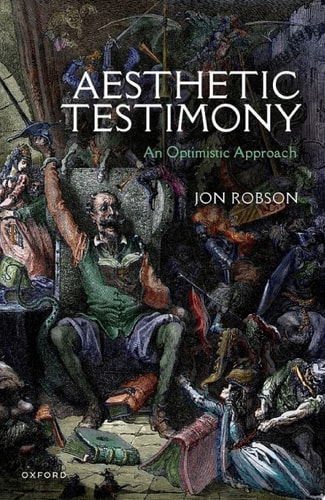
Aesthetic Testimony: An Optimistic Approach
0
0
As an Amazon Associate and affiliate partner, Menrva Books earns from qualifying purchases. Learn more
Author Description
Aesthetic judgements that are formed on the basis of testimony are commonly held to be defective, illegitimate, or otherwise problematic. This book assesses the debate surrounding aesthetic testimony and argues for the surprising conclusion that this widespread view is mistaken. Aesthetic testimony is in no way inferior as a source of judgement when compared to either first-hand aesthetic judgement or testimony concerning non-aesthetic matters. Alongside establishing this position (an extreme form of 'optimism' concerning aesthetic testimony), Jon Robson also responds to the most prominent arguments for the opposing view ('pessimism' concerning aesthetic testimony). Along the way, it also re-examines our understanding of the norms which govern both judgement and assertion in aesthetics.
Menrva's Summary
THE THESIS
Is the reliance on aesthetic testimony inherently defective or illegitimate compared to other forms of judgment? Jon Robson, a philosopher specializing in aesthetics and epistemology, challenges the prevailing pessimistic consensus in philosophical circles. He argues that aesthetic testimony is a reliable and valid source of knowledge, asserting that it functions with the same legitimacy as first-hand aesthetic experience or testimony regarding non-aesthetic facts.
THE SCOPE MAP
What You Will Find
- A comprehensive analysis of the 'optimism' versus 'pessimism' debate regarding aesthetic testimony.
- A critical evaluation of the norms governing aesthetic assertion and belief formation.
- Counter-arguments to traditional philosophical objections against relying on the opinions of others for beauty or art.
Scope Limits
- The text focuses primarily on analytical philosophical frameworks rather than empirical psychological studies of taste.
- It does not provide a practical guide for art criticism but rather a theoretical defense of the epistemic status of aesthetic claims.
THE AUTHORITY PERSPECTIVE
Experts in the field of aesthetics recognize this work as a significant contribution to the ongoing debate regarding the epistemic status of taste. Readers frequently note the academic density of the prose, which is intended for scholars and advanced students of philosophy.
Page Count:
176
Publication Date:
2022-01-01
Publisher:
OUP Oxford
ISBN-10:
0192677519
ISBN-13:
9780192677518
Non-Fiction
Philosophy
Aesthetics
Epistemology
Community Tags
Similar Books