The Future of the Book: Images of Reading in the American Utopian Novel
0
0
As an Amazon Associate and affiliate partner, Menrva Books earns from qualifying purchases. Learn more
Author Description
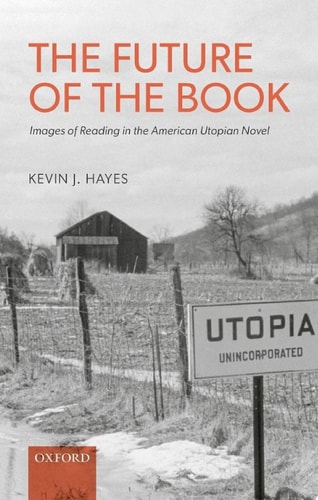
The Future of the Book: Images of Reading in the American Utopian Novel looks at how turn-of-the-century utopian novelists imagined what the book would be like in the ideal future. This works examines many different aspects of book culture. One chapter looks at the utopian residential library, both its contents and its personal and social functions. In the ideal future, everyone has books in their home. Another chapter discusses the public library in utopia. Many of the innovations the utopian novelists imagined correct problems that real public libraries faced in late nineteenth-century America. In utopia, everyone knows how to use the public library. A third chapter shifts the discussion of books and reading from the place of consumption to the place of production, looking at the role of the author in utopia. This chapter also attempts to answer a vexing question: Can an ideal world produce great literature? The utopian novelists said yes, but the novels they imagined in the future make their conclusions more circumspect. A parallel chapter studies what the utopian newspaper would be like. Some utopian novelists projected alternative news media, foreseeing technology that anticipated television and the internet. The final chapter examines what printed books would look like in the ideal future, looking at graphic design, universal languages, and methods to assure that the books would be printed without censorship or editorial intrusion.
Menrva's Summary
THE THESIS
This work investigates how late nineteenth-century American utopian novelists conceptualized the evolution of books, reading habits, and literary production within their envisioned ideal societies. Kevin J. Hayes utilizes a historical lens to analyze how these authors addressed contemporary anxieties regarding literacy, library accessibility, and the role of media. By examining the intersection of utopian theory and book culture, the author argues that these fictional projections reveal as much about the limitations of the era's publishing landscape as they do about the authors' hopes for the future.
THE SCOPE MAP
What You Will Find
- Analysis of residential and public library models in utopian fiction
- Examination of the author's role and the potential for literature in a perfect society
- Historical projections of news media and communication technologies
- Studies on graphic design, universal languages, and censorship-free printing
Scope Limits
- The study is restricted to American utopian novels from the turn of the century
- It does not cover contemporary digital literature or modern utopian theory
THE AUTHORITY PERSPECTIVE
Scholars and historians of the book frequently cite this text for its unique focus on the intersection of utopian literature and material culture. Readers often note the academic density of the prose, which provides a specialized look at how past authors anticipated the future of information dissemination.
Page Count:
246
Publication Date:
2022-01-01
Publisher:
OUP Oxford
ISBN-10:
0192670964
ISBN-13:
9780192670960
English
Book History
Literary Criticism
American
English & College Success
Community Tags
Similar Books