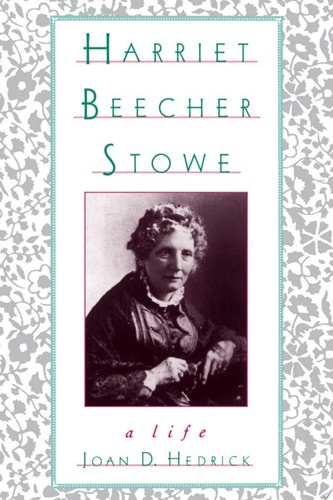
Harriet Beecher Stowe: A Life
0
0
As an Amazon Associate and affiliate partner, Menrva Books earns from qualifying purchases. Learn more
Author Description
"Up to this year I have always felt that I had no particular call to meddle with this subject....But I feel now that the time is come when even a woman or a child who can speak a word for freedom and humanity is bound to speak." Thus did Harriet Beecher Stowe announce her decision to begin work on what would become one of the most influential novels ever written. The subject she had hesitated to "meddle with" was slavery, and the novel, of course, was Uncle Tom's Cabin. Still debated today for its portrayal of African Americans and its unresolved place in the literary canon, Stowe's best-known work was first published in weekly installments from June 5, 1851 to April 1, 1852. It caused such a stir in both the North and South, and even in Great Britain, that when Stowe met President Lincoln in 1862 he is said to have greeted her with the words, "So you are the little woman who wrote the book that created this great war!" In this landmark book, the first full-scale biography of Harriet Beecher Stowe in over fifty years, Joan D. Hedrick tells the absorbing story of this gifted, complex, and contradictory woman. Hedrick takes readers into the multilayered world of nineteenth century morals and mores, exploring the influence of then-popular ideas of "true womanhood" on Stowe's upbringing as a member of the outspoken Beecher clan, and her eventful life as a writer and shaper of public opinion who was also a mother of seven. It offers a lively record of the flourishing parlor societies that launched and sustained Stowe throughout the 44 years of her career, and the harsh physical realities that governed so many women's lives. The epidemics, high infant mortality, and often disastrous medical practices of the day are portrayed in moving detail, against the backdrop of western expansion, and the great social upheaval accompanying the abolitionist movement and the entry of women into public life. Here are Stowe's public triumphs, both before and after the Civil War, and the p
Menrva's Summary
THE THESIS
How did Harriet Beecher Stowe navigate the restrictive gender norms of the nineteenth century to become a pivotal figure in the American abolitionist movement? Joan D. Hedrick, a scholar of American literature and women's history, utilizes extensive archival research and personal correspondence to examine the intersection of Stowe's domestic life as a mother of seven and her public role as a writer who influenced national political discourse.
THE SCOPE MAP
What You Will Find
- A comprehensive examination of the Beecher family's influence on nineteenth-century social reform.
- Analysis of the cultural constraints of 'true womanhood' and their impact on female authorship.
- Historical context regarding the abolitionist movement and the social climate leading to the Civil War.
Scope Limits
- The text focuses primarily on Stowe's life and career, rather than providing a comprehensive literary critique of her entire bibliography.
- It does not attempt to provide an exhaustive military history of the Civil War, focusing instead on the social and cultural catalysts.
THE AUTHORITY PERSPECTIVE
Historians and literary critics frequently cite this work as the definitive modern biography of Stowe, noting its success in contextualizing her life within the broader social history of the era. Scholars appreciate the depth of research regarding the domestic realities of nineteenth-century women, making it a standard reference for those studying the period.
Page Count:
525
Publication Date:
1995-01-01
Publisher:
Oxford University Press
ISBN-10:
0190282630
ISBN-13:
9780190282639
Biography
History
Kindle Store
American
English & College Success
Categories
English
Kindle eBooks
Community & Culture
Women and literature
Nineteenth century
Authors
Medicine
Abolitionism
Biography Autobiography
Womens History
Community Tags
Other Editions(2)
Similar Books







Reader Comments
Share Your Thoughts
No comments yet. Be the first to share your thoughts!