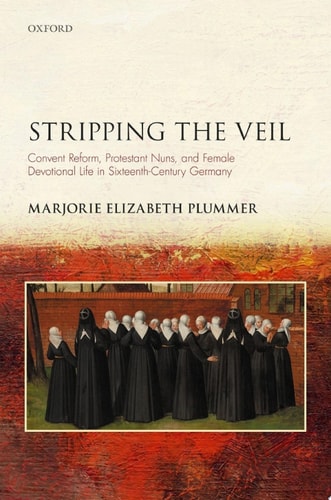
Stripping the Veil: Convent Reform, Protestant Nuns, and Female Devotional Life in Sixteenth Century Germany
0
0
As an Amazon Associate and affiliate partner, Menrva Books earns from qualifying purchases. Learn more
Author Description
Protestant nuns and mixed-confessional convents are an unexpected anomaly in early modern Germany. According to sixteenth-century evangelical reformers' theological positions outlined in their publications and reform-minded rulers' institutional efforts, monastic life in Protestant regions should have ended by the mid-sixteenth century. Instead, many convent congregations exhibiting elements of traditional and evangelical practices in Protestant regions survived into the seventeenth century and beyond. How did these convents survive? What is a Protestant nun? How many convent congregations came to house nuns with diverse belief systems and devotional practices, and how did they live and worship together? These questions lead to surprising answers. Stripping the Veil explores the daily existence, ritual practices, and individual actions of nuns in surviving convents over time against the backdrop of changing political and confessional circumstances in Protestant regions. It also demonstrates how incremental shifts in practice and belief led to the emergence of a complex, often locally constructed, devotional life. This continued presence of nuns and the survival of convents in Protestant cities and territories of the German-speaking parts of the Holy Roman Empire is evidence of a more complex lived experience of religious reform, devotional practice, and confessional accommodation than traditional histories of early modern Christianity would indicate. The internal differences and the emerging confessional hybridity, blending, and fluidity also serve as a caution about designating a nun or groups of nuns as Lutheran, Catholic, or Reformed, or even more broadly as Protestant or Catholic during the sixteenth century.
Menrva's Summary
THE THESIS
This work investigates how and why convent congregations in Protestant regions of sixteenth-century Germany managed to survive and maintain hybrid devotional practices despite the theological and institutional pressures of the Reformation. Marjorie Elizabeth Plummer, a scholar of early modern European history, utilizes archival records and institutional histories to challenge the binary narrative that monastic life vanished immediately upon the adoption of evangelical reforms. She argues that the persistence of these communities reveals a nuanced reality of confessional accommodation and local religious agency that contradicts traditional historiography.
THE SCOPE MAP
What You Will Find
- Analysis of surviving convent congregations in German-speaking territories of the Holy Roman Empire.
- Examination of the daily rituals and devotional lives of nuns navigating shifting political landscapes.
- Documentation of the blending of traditional Catholic and emerging evangelical practices within monastic walls.
Scope Limits
- The study focuses primarily on the German-speaking regions of the Holy Roman Empire.
- It does not provide an exhaustive survey of all monastic orders across Europe, focusing instead on the specific phenomenon of Protestant-era convent survival.
THE AUTHORITY PERSPECTIVE
Experts identify this text as a significant contribution to the study of the Reformation, noting its success in complicating the narrative of religious transition. Scholars frequently highlight the author's meticulous archival research and her ability to demonstrate the fluidity of confessional identity in early modern Europe.
Page Count:
200
Publication Date:
2022-01-01
Publisher:
OUP Oxford
ISBN-10:
0192671642
ISBN-13:
9780192671646
History
Religious History
History of the Americas
Reformation
European History
Womens History
History - Modern
Community Tags
Similar Books