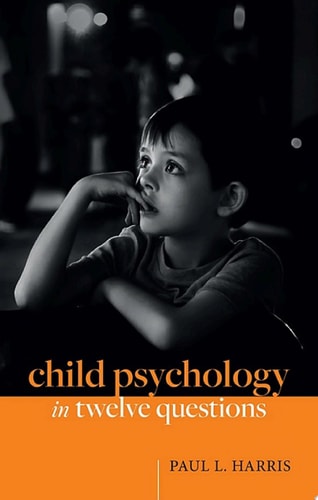
Child Psychology in Twelve Questions
0
0
As an Amazon Associate and affiliate partner, Menrva Books earns from qualifying purchases. Learn more
Author Description
Child psychology as a scientific enterprise is about 100 years old, but while numerous textbooks and practical guides are available, the more meditative questions about the nature of a child's mind are rarely asked. This book explores some of the enduring questions in developmental psychology: How do children form an attachment to their caregivers? How do they learn words? In their imagination, are they confused - or clear-sighted - about the difference between fantasy and reality? How do they decide who to trust? In each case, Paul Harris shows why these questions are important, proposes likely answers, and explains the uncertainties that persist. He outlines important landmarks, both well-known and neglected, and explores broader questions about theories of mind, morality, and cross-cultural differences.
Menrva's Summary
THE THESIS
This book investigates the fundamental nature of the child's mind by addressing twelve enduring questions that define the field of developmental psychology. Paul L. Harris, a professor of psychology, synthesizes a century of scientific inquiry to move beyond standard textbook definitions. He evaluates the current state of developmental research, weighing established theories against persistent uncertainties to provide a clearer picture of how children perceive the world, morality, and social relationships.
THE SCOPE MAP
What You Will Find
- Analysis of cognitive development, including language acquisition and the distinction between fantasy and reality.
- Examination of social-emotional development, specifically attachment theory and the development of trust.
- Discussion of cross-cultural variations in child development and the evolution of theories of mind.
Scope Limits
- The text does not function as a comprehensive clinical manual or a step-by-step parenting guide.
- It does not provide exhaustive coverage of every sub-discipline within modern child psychology.
THE AUTHORITY PERSPECTIVE
Experts and readers recognize this work as a thoughtful bridge between academic research and accessible inquiry. The prose is noted for its clarity, making complex developmental theories understandable for those outside of specialized psychological fields.
Page Count:
336
Publication Date:
2022-01-01
Publisher:
OUP Oxford
ISBN-10:
0192691643
ISBN-13:
9780192691644
Psychology
Developmental Psychology
Education
Parenting