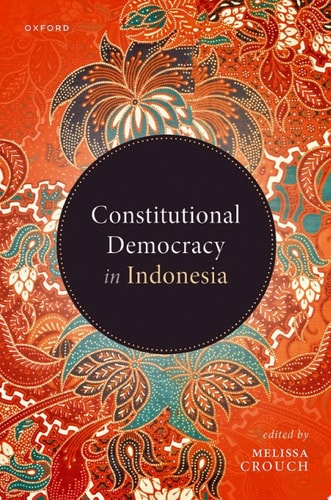
Constitutional Democracy in Indonesia
0
0
As an Amazon Associate and affiliate partner, Menrva Books earns from qualifying purchases. Learn more
Author Description
Indonesia's political and governmental structures underwent sweeping reforms in the late 1990s. After decades of authoritarian rule, a key aspect of the transition to constitutional democracy during this period was the amendment of the 1945 Indonesian Constitution - an important legal text governing the world's third largest democracy. The amended Constitution introduced profound changes to the legal and political system, including an emphasis on judicial independence, a bill of rights, and the establishment of a Constitutional Court.This volume, with chapters written by leading experts, explores the ongoing debates over the meaning, implementation, and practice of constitutional democracy in Indonesia. This includes debates over the powers of the legislature, the role of the military, the scope of decentralisation, the protection of rights and permissible limits on rights, the regulation of elections, the watchdog role of accountability agencies, and the leading role of the Constitutional Court. These legal issues are analysed in light of the contemporary social, political, and economic environment that has seen a decline in tolerance, freedom, and respect for minorities. Contributions to this volume review the past two decades of reform in Indonesia and assess the challenges to the future of constitutional democracy amidst the wide-spread consensus on the decline of democracy in Indonesia. Demands for amendments to the Constitution and calls to revert to its initial form would be a reversal of Indonesia's democratic gains.
Menrva's Summary
THE THESIS
This volume investigates the efficacy and stability of Indonesia's constitutional democracy following the sweeping reforms initiated in the late 1990s. Edited by Professor Melissa Crouch, the book compiles research from leading legal and political experts to evaluate how the amended 1945 Constitution functions within the nation's contemporary socio-political environment. The contributors analyze the tension between institutional democratic frameworks and the observed decline in tolerance, civil liberties, and minority protections over the past two decades.
THE SCOPE MAP
What You Will Find
- Analysis of the 1945 Indonesian Constitution and its subsequent amendments.
- Examination of the Constitutional Court's role and judicial independence.
- Discussion on legislative powers, military influence, and decentralization policies.
- Review of election regulations and the function of accountability agencies.
Scope Limits
- The text does not provide a comprehensive history of pre-1990s Indonesian governance.
- It does not offer a predictive model for future constitutional amendments.
THE AUTHORITY PERSPECTIVE
Experts recognize this volume as a critical resource for understanding the legal and political complexities of post-authoritarian Indonesia. Readers frequently note the academic density of the prose, which provides a rigorous examination of the challenges facing democratic institutions in the region.
Page Count:
331
Publication Date:
2022-01-01
Publisher:
OUP Oxford
ISBN-10:
0192698176
ISBN-13:
9780192698179
Constitutional Law
Indonesia
Asian Studies
Democracy
Law_indonesia
Professional Career & Trade
Law
Community Tags
Similar Books