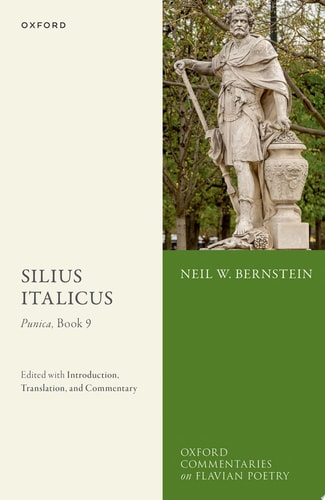
Silius Italicus: Punica, Book 9: Edited with Introduction, Translation, and Commentary
0
0
As an Amazon Associate and affiliate partner, Menrva Books earns from qualifying purchases. Learn more
Author Description
Book 9 of Silius Italicus' first-century Latin epic poem Punica begins the narrative of the Battle of Cannae (August 216 BC). This book is an integral part of the epic's three-book movement that narrates one of the largest battles in Roman history. It opens with the dispute between the consuls Paulus and Varro over giving battle, in the face of hostile omens and Hannibal's record of successful combat. On the eve of the battle, the Roman soldier Solymus accidentally kills his father Satricus, thereby presenting an omen of disaster for the Roman army. After Hannibal and Varro encourage their troops, the initial phase of the battle commences. The gods descend to the battlefield, and Mars and Minerva fight the sole full-scale theomachy in Latin epic. Aeolus summons the Vulturnus wind at Juno's request to devastate the Roman ranks. After the gods have departed, Hannibal's elephant troops advance and scatter the Roman forces. The book ends by recapitulating the opening episode: Varro admits his mistake in giving battle and flees the battlefield. This volume is the first full-scale commentary in English devoted exclusively to Punica 9. It features the Latin text with a critical apparatus and a parallel English translation. Detailed commentary notes provide information on literary style, use of language, poetic intertexts, and scholarly interpretation. The Introduction offers further context and background, including sections on Silius Italicus and his era, the historiographic and rhetorical traditions that he adopted, the inter- and intra-textuality of the Cannae episode, and the book's use of diction and metre.
Menrva's Summary
THE THESIS
This volume investigates the literary, historical, and rhetorical construction of the Battle of Cannae as depicted in Book 9 of Silius Italicus's epic poem, the Punica. Neil W. Bernstein, a scholar of Flavian poetry, provides a comprehensive scholarly framework that situates the text within the broader context of Roman historiography and epic tradition. By analyzing the interplay between divine intervention and human error, the author argues that Silius Italicus utilizes the Cannae episode to reflect on the complexities of Roman identity and the weight of historical memory.
THE SCOPE MAP
What You Will Find
- A complete Latin text of Punica Book 9 with critical apparatus.
- A parallel English translation for comparative study.
- Detailed commentary on poetic diction, metre, and intertextual references to earlier Latin epics.
- An introduction covering the historical context of the Flavian era and the rhetorical traditions adopted by the poet.
Scope Limits
- The analysis is strictly confined to Book 9 of the Punica and does not provide a comprehensive commentary on the entire epic poem.
- The volume focuses primarily on literary and philological analysis rather than a general historical account of the Second Punic War.
THE AUTHORITY PERSPECTIVE
Experts identify this work as a significant contribution to the study of Flavian epic, noting the precision of the commentary in addressing the complexities of Silius Italicus's style. Scholars frequently highlight the volume as a foundational resource for those examining the intersection of historiography and poetic artifice in Latin literature.
Page Count:
2240
Publication Date:
2022-01-01
Publisher:
OUP Oxford
ISBN-10:
0192694227
ISBN-13:
9780192694225
English & College Success
Literary Criticism
Ancient History
Epic Poetry
English
Commentary
Latin
Community Tags
Similar Books