
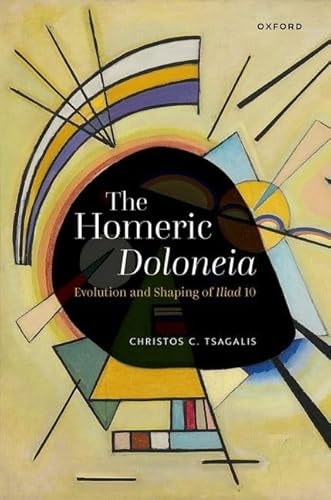
The Homeric Doloneia: Evolution and Shaping of Iliad 10
0
0
As an Amazon Associate and affiliate partner, Menrva Books earns from qualifying purchases. Learn more
Author Description
Cover -- The Homeric Doloneia: Evolution And Shaping Of Iliad 10 -- Copyright -- Dedication -- Epigraph -- Preface -- Contents -- Bibliographical Conventions And Abbreviations -- Note To The Reader -- Introduction -- 1. Main Questions -- 2. Wider Implications -- 3. Current Status Of Research On Iliad 10 -- 3.1 The Einzellied Theory -- 3.2 Quellenforschung -- 3.3 The Post-post-traditional Singer -- 3.4 The Poetics Of Ambush -- 3.5 Oral, Intertextual Neoanalysis -- 4. Method -- 5. Organization Of The Book -- 1: Theoretical Aspects -- Introduction -- 1.1 Internal Criteria 1.2 External Criteria -- 1.3 Transference Of Motifs, Themes, And Phraseology -- 1.4 Entextualization -- 1.5 Mythological Reference And Epic Allusion -- 2: A First Thematic Approach: Intratextual References -- Introduction -- 2.1 Reference To Events And Allusion To Themes: Drawing The Line -- 2.2 Intratextual Associations On The Level Of Theme And Phraseology -- 2.2.1 Implicit Intratextual References -- 2.2.2 Allusion To Themes: Backward References -- 2.2.3 Allusion To Themes: Forward References -- 2.2.4 Bridging Backward And Forward References -- 2.2.5 Verbal Associations 2.3 A Putative Transference Of A Narrative Sequence: Iliad 13 Alludes To Iliad 10 -- 2.4 An Interpretive Gain From The Authenticity Of The Doloneia: Character-drawing -- 2.4.1 Agamemnon -- 2.4.2 Diomedes -- 2.4.3 Diomedes And Odysseus As A Pair -- 2.4.4 Hector -- 3: A Second Thematic Approach: The Horses Of Rhesus -- Introduction -- 3.1 Horses In The Iliad: Some Basic Points -- 3.2 The Horses Of Rhesus And A Telescopic View Of The Iliad -- 3.3 The Horses Of Rhesus: Magnificent But Not Divine -- 3.4 The Trojan Horses Of Diomedes And The Chariot Race -- 3.5 The Whip -- 3.6 Spiegelungseffekt 3.7 Homeric Silence And The Policy Of Exclusion -- 4: The Alleged Un-iliadic Features Of Iliad 10: Speeches, Clothing And Arming, And Zielinski's Law -- Introduction -- 4.1 Speeches -- 4.2 Clothing And Arming -- 4.2.1 Clothing -- 4.2.1.1 Agamemnon,
Menrva's Summary
THE THESIS
This work investigates the compositional history, thematic integration, and stylistic authenticity of the Doloneia, the tenth book of the Iliad. Christos Tsagalis, a scholar specializing in Homeric poetry, utilizes a combination of oral-formulaic theory, neoanalysis, and intertextual methodology to argue that the Doloneia is a sophisticated, integrated component of the epic rather than a later, extraneous addition. By examining internal narrative structures and linguistic patterns, the author demonstrates how this specific book functions within the broader architecture of the Iliad.
THE SCOPE MAP
What You Will Find
- Analysis of intratextual references connecting Book 10 to the rest of the Iliad
- Examination of the 'Einzellied' theory and historical Quellenforschung
- Detailed study of motif transference, epic allusion, and characterization of figures like Diomedes and Odysseus
- Investigation into specific 'un-Iliadic' features including speech patterns and arming scenes
Scope Limits
- The text focuses primarily on the literary and structural evolution of Book 10 rather than a general historical overview of the Trojan War
- It does not provide a line-by-line commentary but rather a thematic and methodological analysis
THE AUTHORITY PERSPECTIVE
Scholars in the field of Classics recognize this work as a rigorous contribution to the ongoing debate regarding the unity of the Homeric epics. Readers frequently note the academic density of the prose, which assumes a high level of familiarity with Greek philology and Homeric scholarship.
Page Count:
0
Publication Date:
1900-01-01
Publisher:
Oxford University Press,
ISBN-10:
0192698699
ISBN-13:
9780192698698
Philology
Homeric Studies
Homer
Literary Criticism
Community Tags
Other Editions(3)

Similar Books
Reader Comments
Share Your Thoughts
No comments yet. Be the first to share your thoughts!