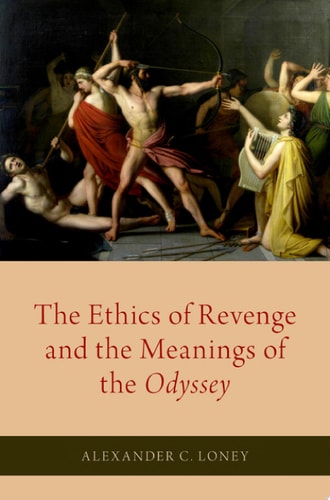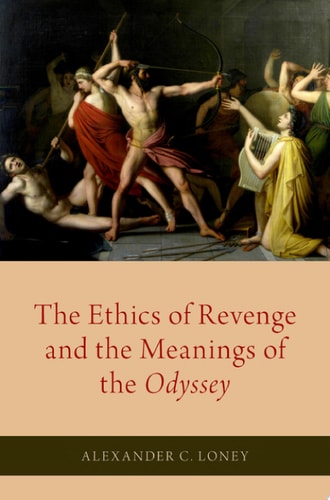
The Ethics of Revenge and the Meanings of the Odyssey
0
0
As an Amazon Associate and affiliate partner, Menrva Books earns from qualifying purchases. Learn more
Author Description
This book is the first in-depth examination of revenge in the Odyssey. The principal revenge plot of the Odyssey --Odysseus' surprise return to Ithaca after twenty away and his vengeance on Penelope's suitors -- is the act for which he is most celebrated. This story forms the backbone of the Odyssey. But is Odysseus' triumph over the suitors as univocally celebratory as is often assumed? Does the poem contain and even suggest other, darker interpretations of Odysseus' greatest achievement?This book offers a careful analysis of several other revenge plots in the Odyssey -- those of Orestes, Poseidon, Zeus, and the suitors' relatives. It shows how these revenge stories color one another with allusions (explicit and implicit) that connect them and invite audiences to interpret them in light of one another. These stories -- especially Odysseus' revenge upon the suitors -- inevitably turn out to have multiple meanings. One plot of revenge slips into another as the offender in one story becomes a victim to be avenged in the next. As a result, Odysseus turns out to be a much more ambivalent hero than has been commonly accepted. And in the Odyssey's portrayal, revenge is an unstable foundation for a community. Revenge also ends up being a tenuous narrative structure for an epic poem, as a natural end to cycles of vengeance proves elusive. This book offers a radical new reading of the seemingly happy ending of the poem.
Menrva's Summary
THE THESIS
This book investigates whether the revenge enacted by Odysseus in the Odyssey is a celebratory triumph or an act that invites darker, more critical interpretations. Alexander C. Loney, a scholar of classical literature, utilizes a close reading of the Homeric text to challenge traditional views of the poem's conclusion. By analyzing the interconnected revenge plots within the epic, he argues that the narrative structure of vengeance is inherently unstable and portrays Odysseus as a deeply ambivalent figure.
THE SCOPE MAP
What You Will Find
- Comparative analysis of revenge plots involving Orestes, Poseidon, Zeus, and the suitors' relatives.
- A structural examination of how revenge functions as a narrative device in epic poetry.
- An exploration of the ethical implications of vengeance within the context of the Ithacan community.
Scope Limits
- The study focuses primarily on the thematic and structural elements of revenge rather than a comprehensive historical or archaeological survey of the period.
- It does not provide a general introduction to the Odyssey for absolute beginners, assuming a baseline familiarity with the text.
THE AUTHORITY PERSPECTIVE
Scholars and classicists recognize this work as a significant contribution to the study of Homeric ethics and narrative construction. Readers frequently note the academic rigor of the prose, which provides a sophisticated re-evaluation of the poem's final acts.
Page Count:
280
Publication Date:
2019-01-25
Publisher:
Oxford University Press
ISBN-10:
0190909676
ISBN-13:
9780190909673
Philosophy
In literature
Literary Criticism
Epic Poetry
Homer