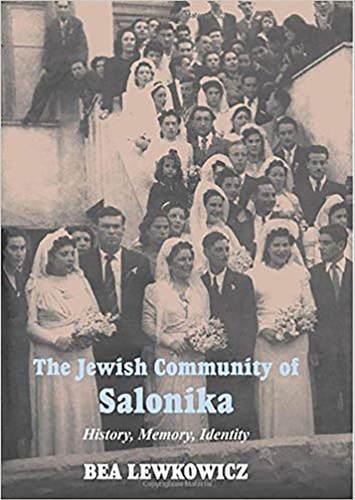
The Jewish Community of Salonika: History, Memory, Identity
0
0
As an Amazon Associate and affiliate partner, Menrva Books earns from qualifying purchases. Learn more
Author Description
This book is a pioneering study of the often forgotten Sephardi voices of the Holocaust. It is an account of the Sephardi Jewish community of the Greek city of Salonika, which at one point numbered 80,000 members, but which was almost completely annihilated during the German occupation of Greece in the Second World War. Through her systematic series of interviews with the remnants of this once-flourishing community, the author reawakens the communal memory and is able to show how individual identities and memories can be seen to have been shaped by historical experience. She traces the radical demographic and political changes Salonika itself has undergone, in particular the ethnic and religious composition of the city's population, and she interprets the narratives of the Salonikan Jewish survivors in the context of this changing landscape of memory and as part of contemporary Greece. With the vivid power of oral history and ethnography, this book highlights a significant aspect of the Jewish experience.
Menrva's Summary
THE THESIS
This book investigates the history, memory, and identity of the Sephardi Jewish community of Salonika, a community nearly annihilated during the Holocaust. The author, Bea Lewkowicz, draws on systematic interviews with survivors to reconstruct the communal memory of this once-flourishing population, which numbered 80,000 members. The study examines how individual identities and memories were shaped by historical experience, tracing the demographic and political transformations of Salonika itself. It interprets survivor narratives within the context of a changing landscape of memory and contemporary Greece, highlighting a significant aspect of the Jewish experience through oral history and ethnography.
THE SCOPE MAP
- A pioneering study of Sephardi Jewish voices during the Holocaust.
- Focuses on the Sephardi Jewish community of Salonika, Greece.
- Details the near annihilation of the community during the German occupation in WWII.
- Utilizes systematic interviews with survivors to reconstruct communal memory.
- Analyzes how individual identities and memories are shaped by historical experience.
- Traces radical demographic and political changes in Salonika.
- Interprets survivor narratives within the context of changing memory and contemporary Greece.
- Employs oral history and ethnography to highlight a significant aspect of the Jewish experience.
THE AUTHORITY PERSPECTIVE
This book is recognized as a pioneering study that brings to light the often-forgotten Sephardi voices of the Holocaust. The author's use of systematic interviews with survivors is lauded for its ability to reawaken communal memory and demonstrate the impact of historical experience on individual identities. The work is appreciated for its detailed tracing of Salonika's demographic and political shifts, and for interpreting survivor narratives within the broader context of memory and contemporary Greece. Through vivid oral history and ethnography, the book effectively highlights a significant aspect of the Jewish experience during this period.
Page Count:
266
Publication Date:
2006-03-01
Publisher:
Vallentine Mitchell
ISBN-10:
0853035792
ISBN-13:
9780853035794
History
Non-Fiction
Community Studies
Jewish Studies
Oral History
Community Tags
Similar Books