
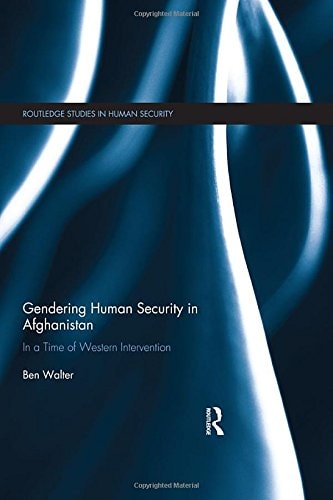
Gendering Human Security in Afghanistan in a Time of Western Intervention
0
0
As an Amazon Associate and affiliate partner, Menrva Books earns from qualifying purchases. Learn more
Author Description
This book employs the concept of human security to show what the term means from the perspective of women in Afghanistan. It engages with a well-established debate in academic and policy-making contexts regarding the utility of human security as a framework for understanding and redressing conflict. The book argues that this concept allows the possibility of articulating the substantive experiences of violence and marginalisation experienced by people in local settings as well as their own struggles towards a secure and happy life. In this regard, it goes a long way to making sense of the complex dynamics of conflict which have confounded Western policy-makers in their ongoing state-building mission in Afghanistan. However, despite this inherent potential, the idea of human security still needs refinement. Crucially, it has benefitted from critical feminist and critical social theories which provide the conceptual and methodological depth necessary to apprehend what a progressive ethical program of security looks like and how it can be furthered. Using this framework, the work provides a critical reconstruction of the effect of the US-led Western Intervention on women's experiences of (in)security in the three provincial contexts of Nangarhar, Bamiyan and Kabul. This reconstruction is drawn from a wealth of historical and contemporary sociological research alongside original fieldwork undertaken in Delhi, India, during 2011 with women and men from the country's different communities. This book will be of much interest to students of human security, state-building, gender politics, war and conflict studies and IR in general.
Menrva's Summary
THE THESIS
This book investigates the concept of human security through the lived experiences of women in Afghanistan during a period of Western intervention. It critically examines the utility of human security as a framework for understanding and addressing conflict, arguing that it can articulate the experiences of violence and marginalization while also capturing individuals' aspirations for a secure life. The work is informed by critical feminist and social theories, providing a conceptual and methodological depth to define a progressive ethical program of security. It reconstructs the effects of the US-led Western intervention on women's security in Nangarhar, Bamiyan, and Kabul, drawing on extensive research and fieldwork.
THE SCOPE MAP
- Analysis of human security from the perspective of Afghan women.
- Engagement with academic and policy debates on the utility of human security.
- Application of critical feminist and critical social theories to security studies.
- Reconstruction of the impact of Western intervention on women's experiences of insecurity.
- Case studies from Nangarhar, Bamiyan, and Kabul provinces.
- Integration of historical and contemporary sociological research.
- Insights from original fieldwork conducted with Afghan men and women in Delhi.
THE AUTHORITY PERSPECTIVE
This book is positioned as a significant contribution to the fields of human security, gender politics, and conflict studies. Its interdisciplinary approach, combining theoretical frameworks with empirical research and fieldwork, aims to provide a nuanced understanding of security dynamics in Afghanistan. The work is expected to be of considerable interest to students and scholars in international relations, state-building, and war and conflict studies, offering a critical perspective on Western policy-making in the region.
Page Count:
192
Publication Date:
2019-12-12
Publisher:
Taylor & Francis Group
ISBN-10:
0367876612
ISBN-13:
9780367876616
Non-Fiction
History
Politics
Gender Studies
Conflict Studies
Afghanistan
Feminist Theory
International relations
Security Studies
Sociology
Community Tags
Other Editions(3)
Similar Books

Reader Comments
Share Your Thoughts
No comments yet. Be the first to share your thoughts!